



Attackers Are Moving at Machine Speed. Is Your Security Operation Still Waiting on People?
Attackers increasingly use automation, while many security operations still depend on manual investigation and approval handoffs. David Harris examines how AI-assisted investigation, evidence-based decisions, bounded automation, and verified containment can reduce decision delays and business exposure.
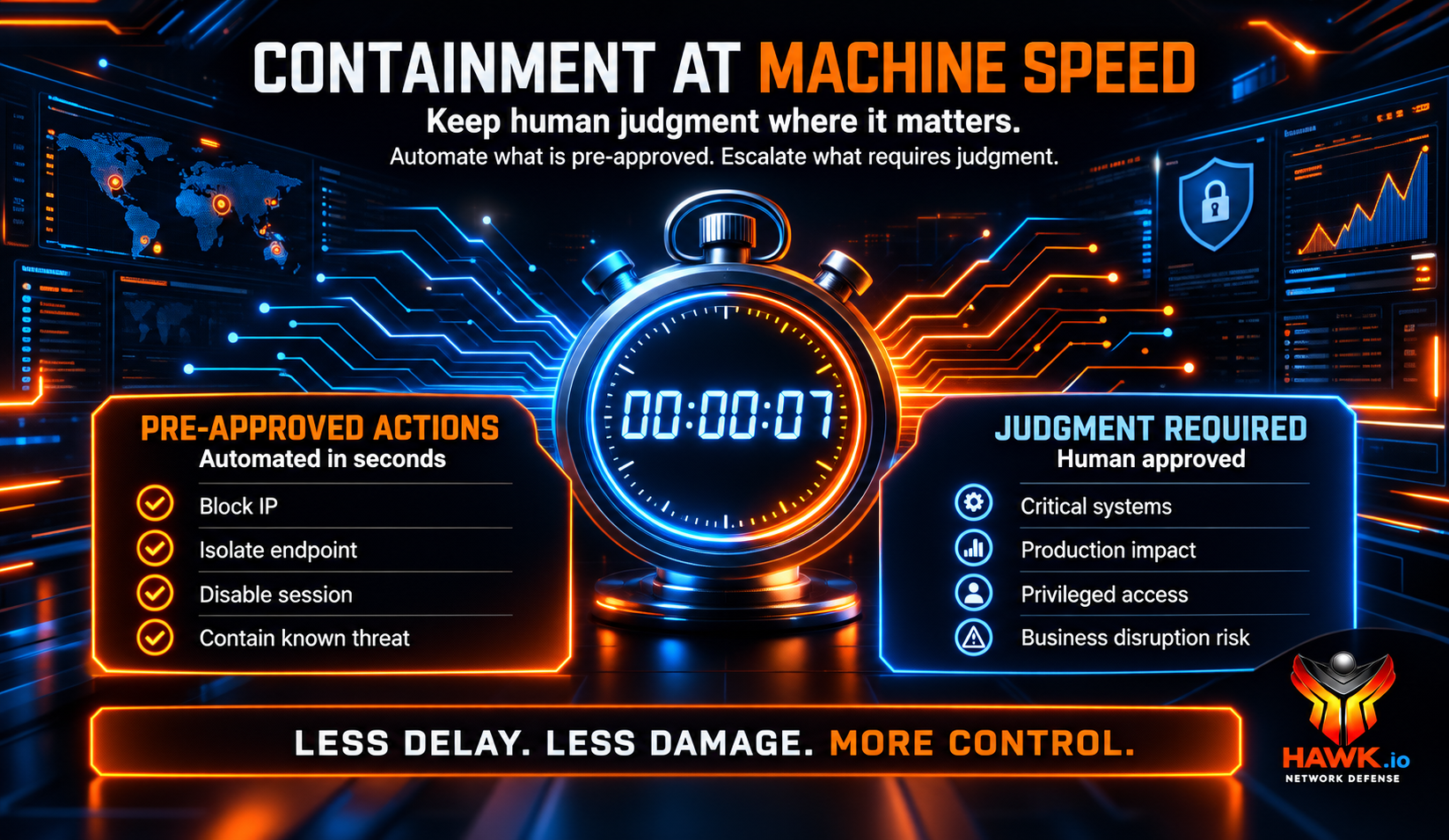
Containment at Machine Speed
Detecting a threat in seconds means little if containment takes hours. Tim Shelton, Founder and CTO of HAWK Network Defense, examines decision latency, customer-defined automation, evidence-based response, verified containment, and the cost of AI-driven security operations.
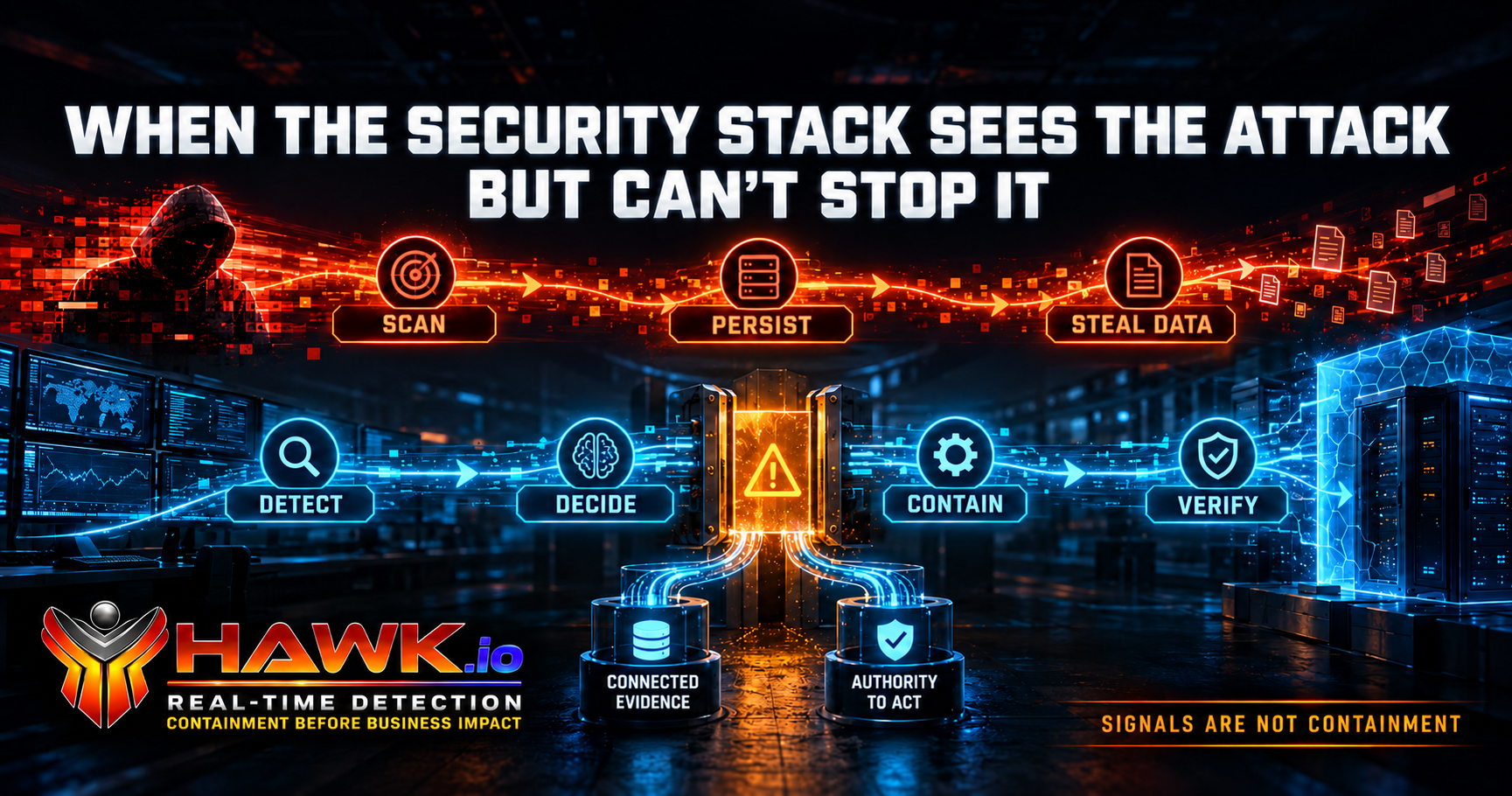
WHEN THE SECURITY STACK SEES THE ATTACK BUT CAN’T STOP IT
China-linked cyber activity highlights a critical security operations challenge: detecting an intrusion is not the same as containing it. HAWK examines the October 8, 2026 advisory and the need to connect network, endpoint, identity, and email evidence to authorized action and verified containment.
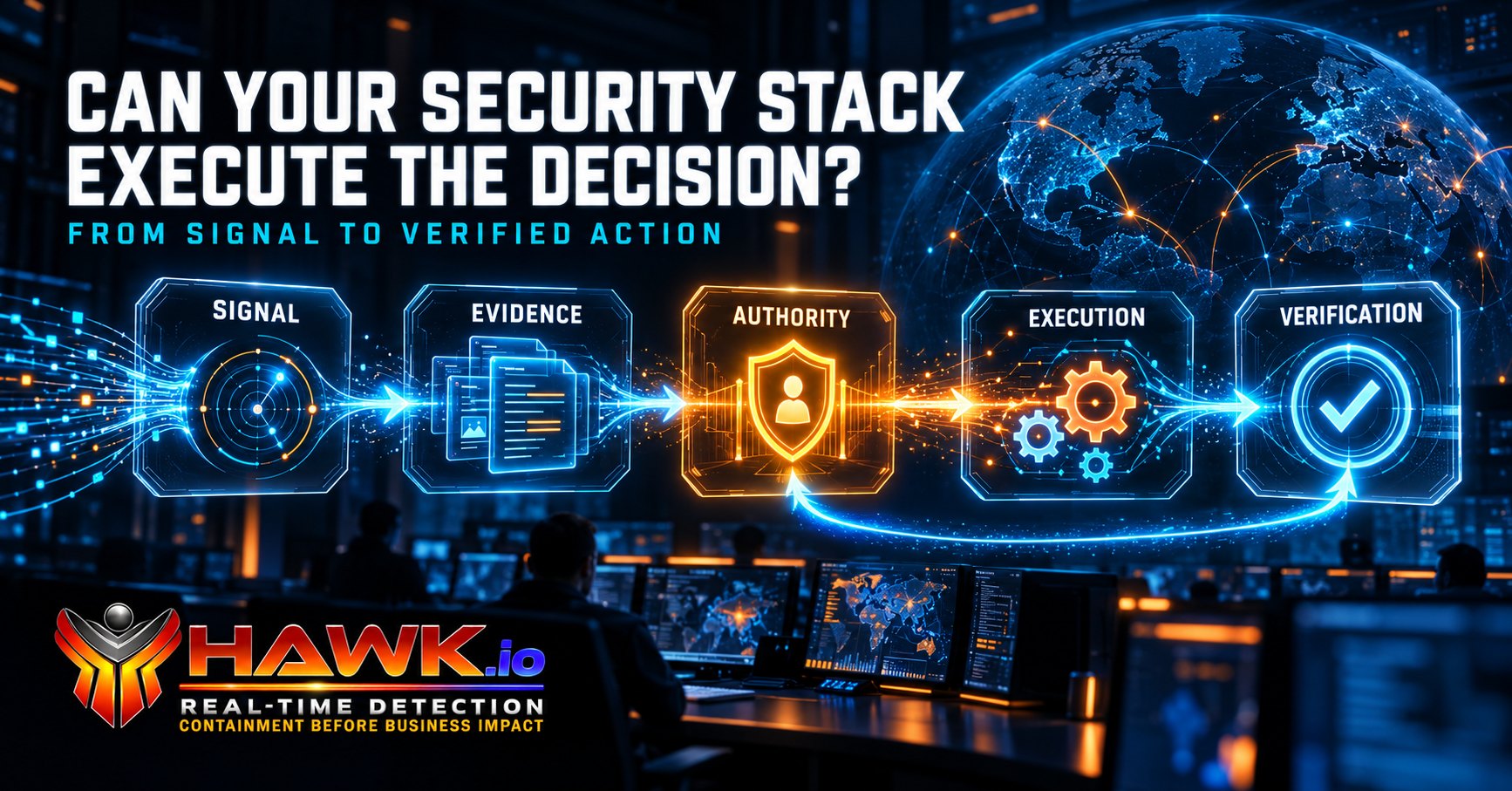
CAN YOUR SECURITY STACK ACTUALLY EXECUTE THE DECISION?
Your security stack may detect a threat quickly, but can it execute the response? HAWK Network Defense examines five critical stages—signal, evidence, authority, execution, and verification—and explains how organizations can reduce decision latency, eliminate unnecessary handoffs, and achieve verified threat containment.
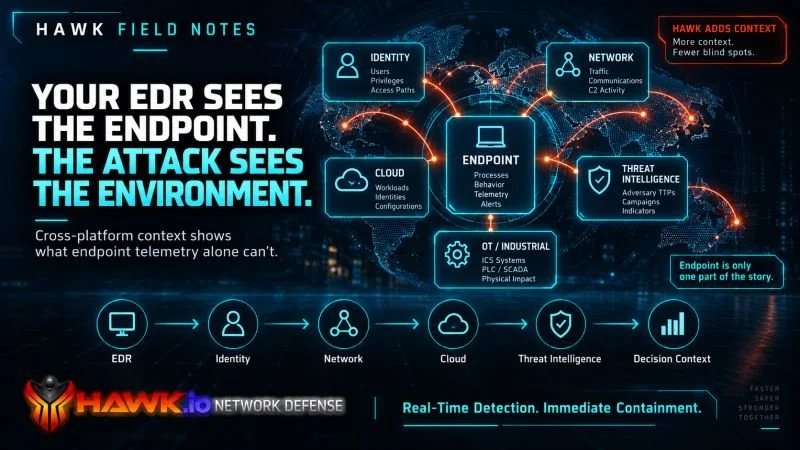
Your EDR Sees the Endpoint. The Attack Sees the Environment.
Endpoint Detection and Response (EDR) provides essential endpoint visibility, but modern cyberattacks extend across identities, cloud services, networks, and applications. HAWK Network Defense explains why connecting endpoint evidence with broader security context enables faster investigations, better decisions, and more effective threat containment.
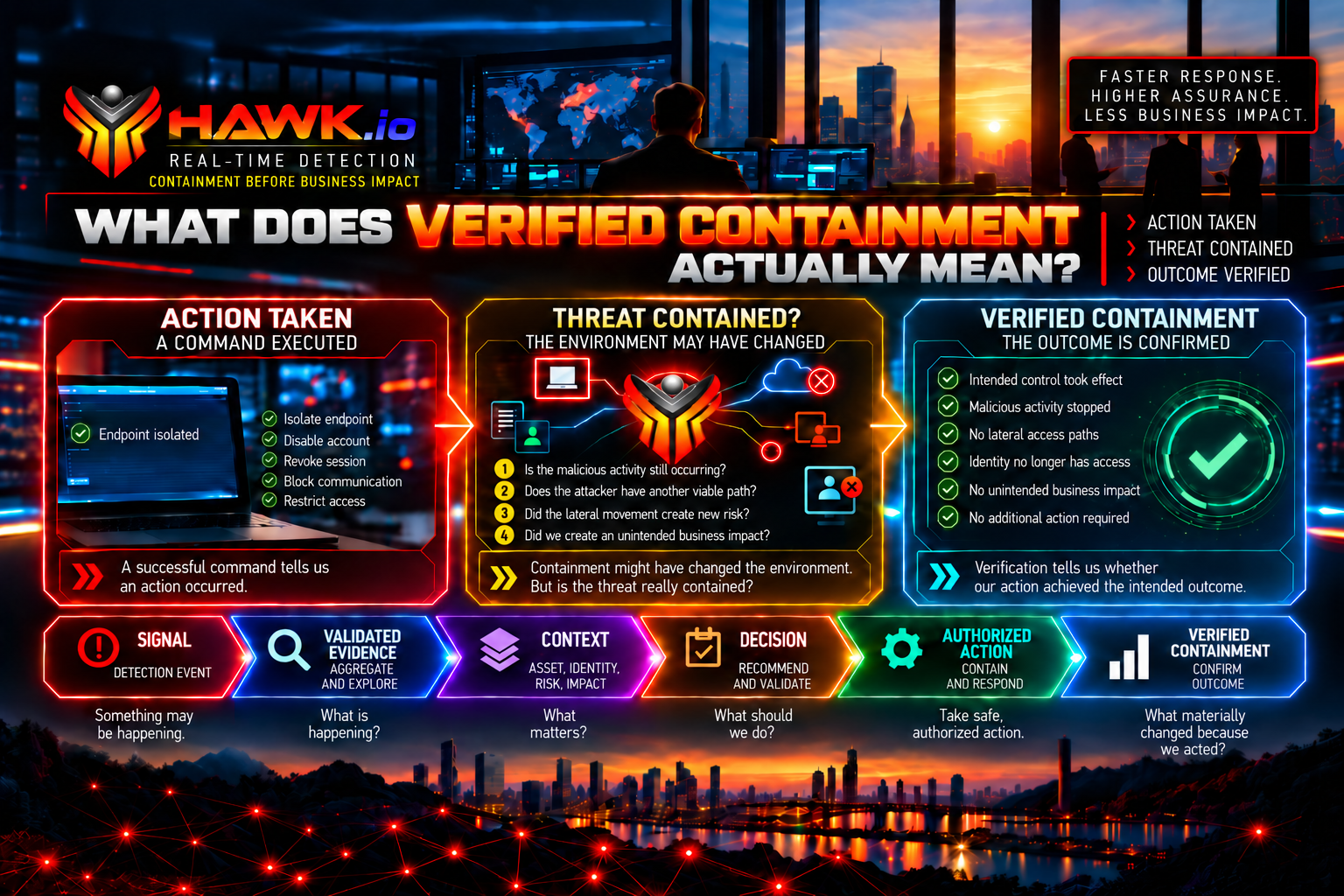
Security Visibility vs. Decision Context: Why More Data Isn't Enough
More security visibility doesn't automatically produce better security decisions. HAWK Network Defense explains why modern security operations need validated evidence, relevant business context, clearly defined authority, and verified containment to reduce decision latency and respond effectively.