


What Should an MDR Service-Level Agreement Actually Cover?
An MDR service-level agreement should make service commitments testable. Examine scope, timing definitions, response authority, evidence and exceptions before relying on the headline promise.
Resilience Is Really About Preserving Options
Resilience gives leadership usable choices under pressure. David Harris examines dependencies, decision rights and the investment needed to keep alternatives credible.
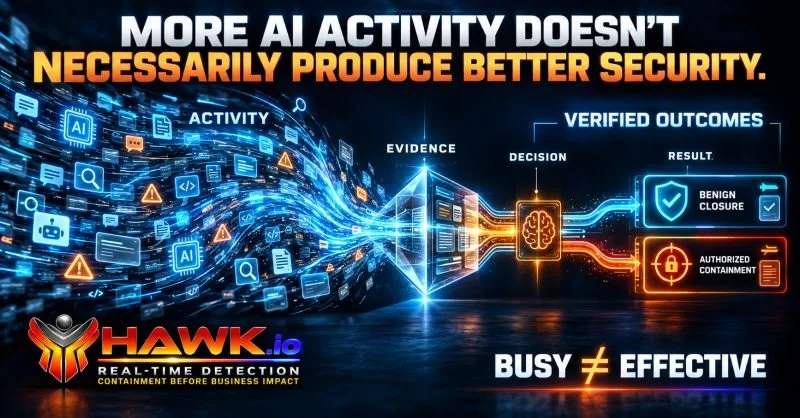
More AI Activity Doesn’t Necessarily Produce Better Security
More AI-generated alerts, investigations, and summaries do not automatically improve cybersecurity. HAWK Network Defense explains how validated findings, decision quality, analyst rework, response timeliness, and verified outcomes reveal whether AI is improving security operations.
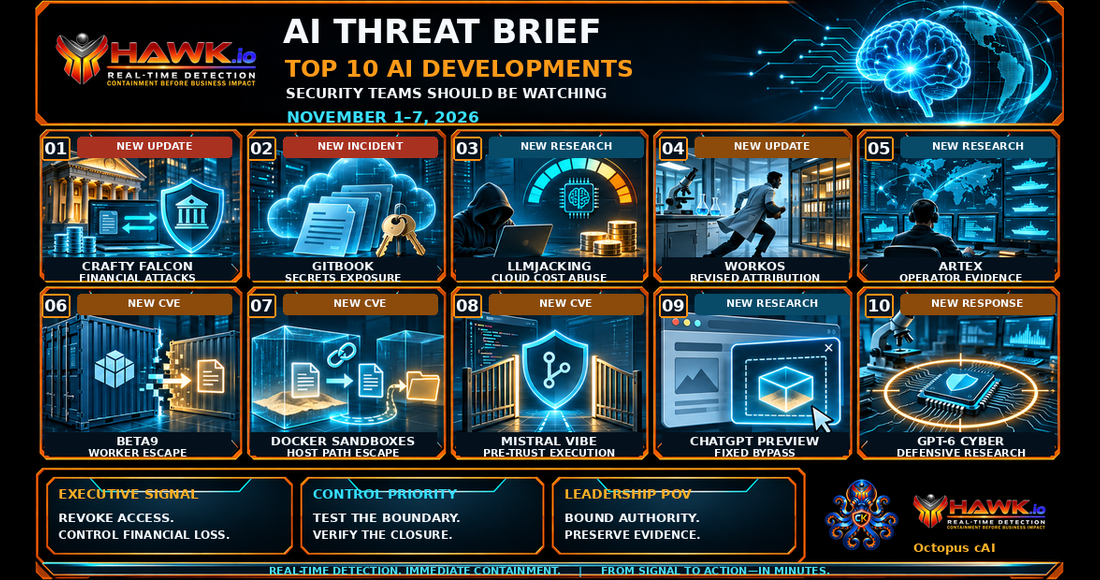
HAWK AI Threat Brief | Top 10 AI Developments Security Teams Should Be Watching
HAWK’s November 1–7 AI Threat Brief examines ten security developments, their evidence limits, and response priorities across financial APIs, supplier secrets, cloud costs, and agent boundaries.
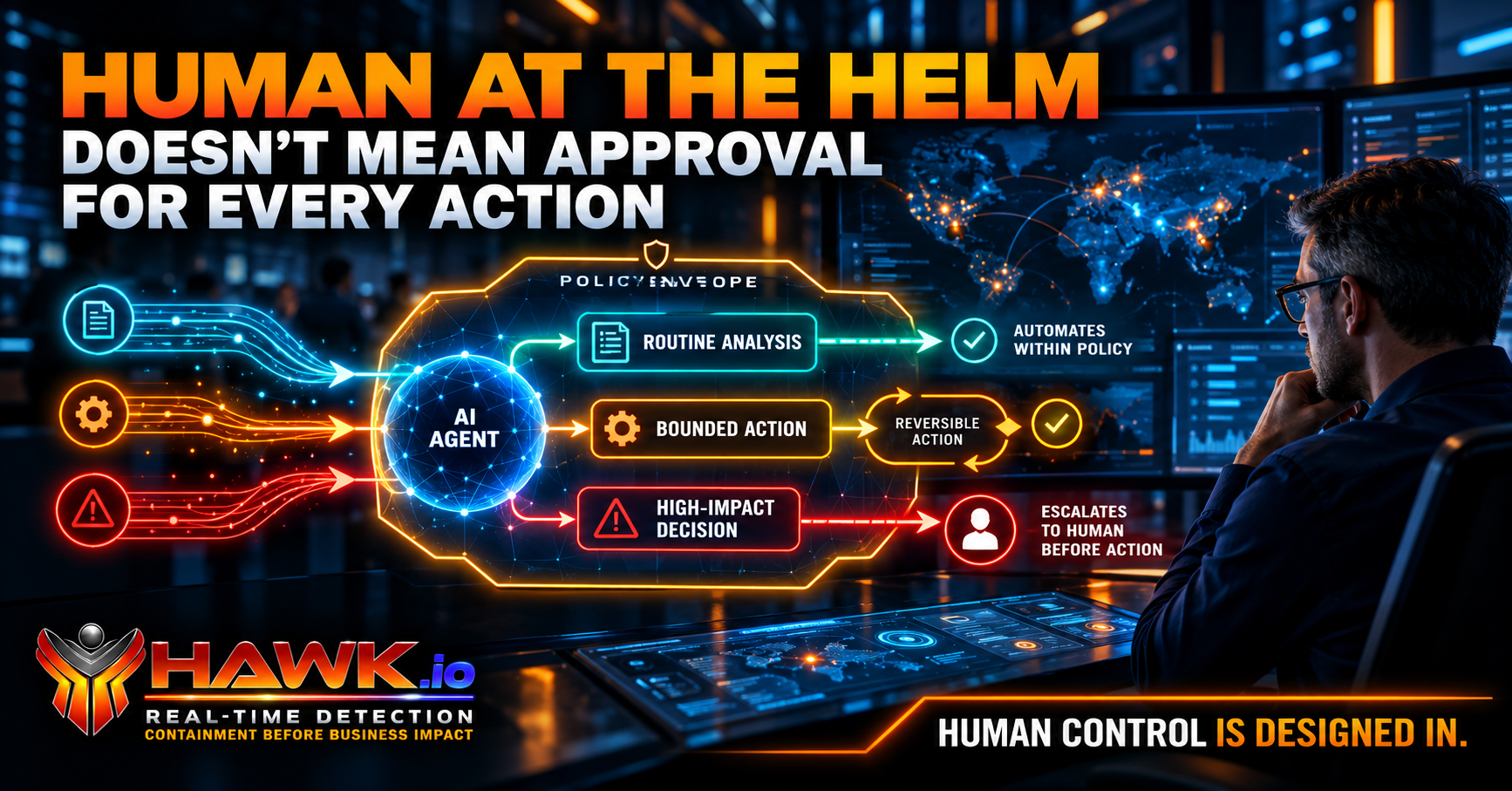
Human at the Helm Doesn't Mean Human Approval for Every Action
Human oversight does not require an analyst to approve every AI agent action. HAWK Network Defense explains how security teams can establish bounded authority, automate routine investigation, escalate consequential decisions, maintain intervention controls, and measure whether human accountability remains effective without unnecessary operational delays.
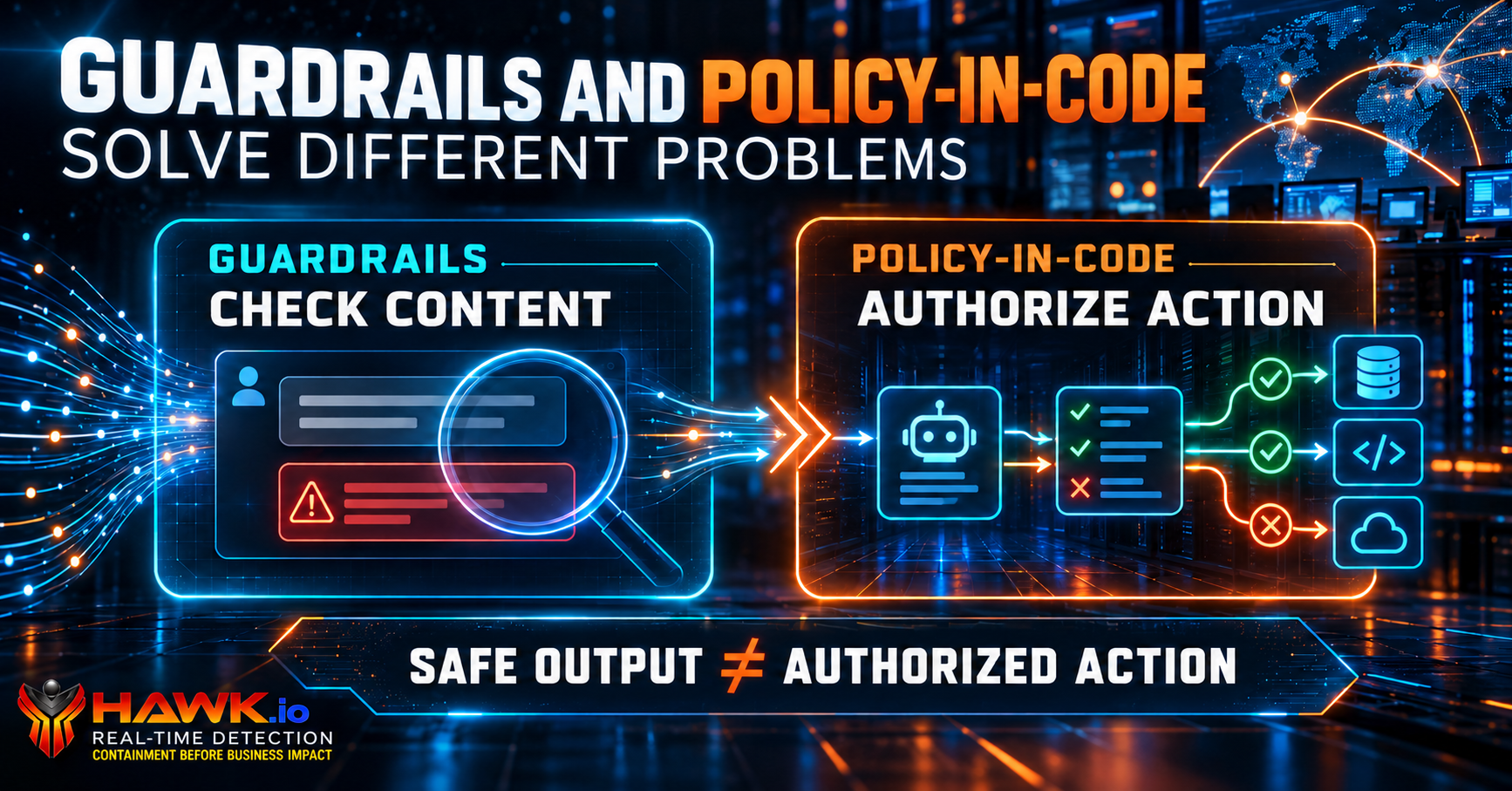
Guardrails and Policy-in-Code Solve Different Problems
AI guardrails and policy-in-code protect different security boundaries. HAWK Network Defense explains how prompt-injection defenses, evidence validation, runtime authorization, and enforceable policies work together to secure agentic AI operations.

What a Strong AI Agent Authorization Model Requires
A strong AI agent authorization model requires more than credentials and approval workflows. HAWK Network Defense examines five authorization boundaries—purpose, scope, permitted actions, conditions, and duration—and explains how organizations can enforce those boundaries, test for bypass paths, audit consequential actions, and measure whether delegated authority is working as intended.

The Most Expensive AI May Be the AI Nobody Owns
The hidden cost of enterprise AI may be unclear ownership after deployment. David Harris outlines five requirements for connecting AI investment to measurable business value, decision authority, and ongoing accountability.
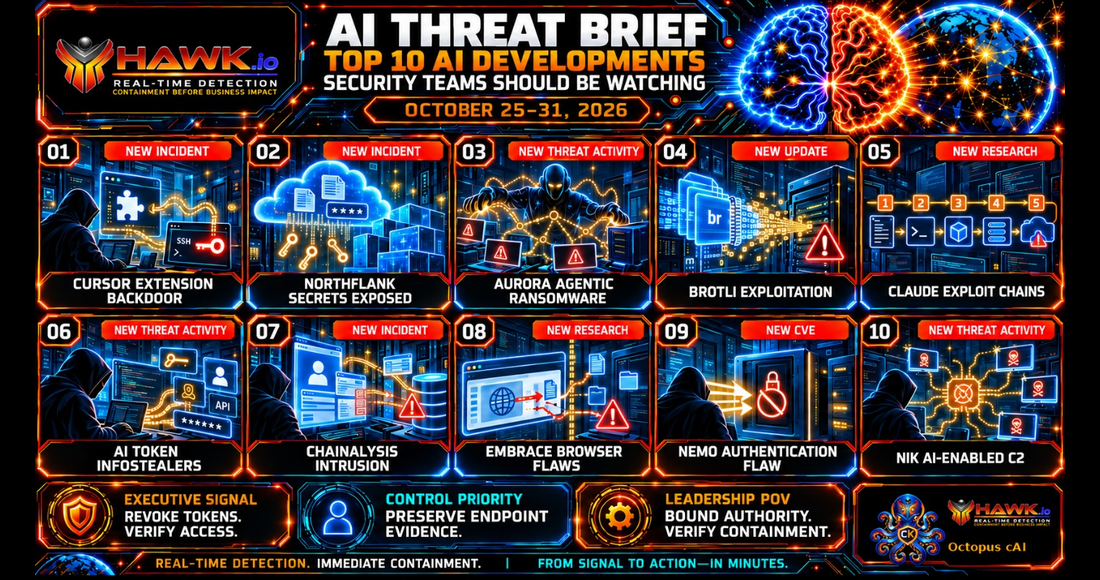
HAWK AI Threat Brief: Top 10 AI Developments Security Teams Should Be Watching
HAWK's AI Threat Brief covers 10 key security developments from October 25–31, 2026, including malicious extensions, stolen AI credentials and agentic attacks.
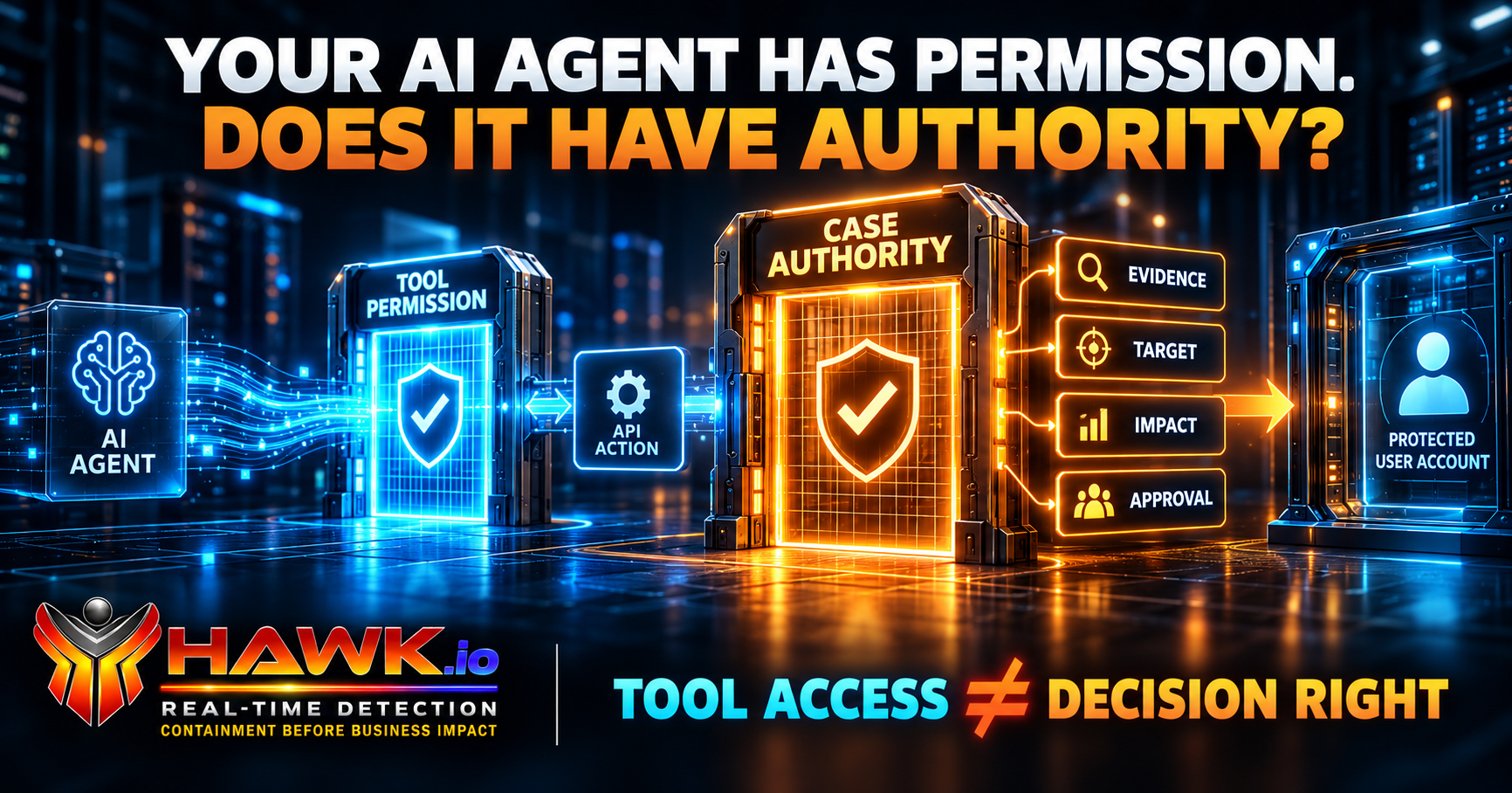
Your AI Agent Has Permission. Does It Have Authority?
An AI agent may have the credentials needed to disable an account, revoke a session, or change a security control. But technical permission does not establish that the action is justified. HAWK Network Defense explains how validated evidence, assigned scope, business consequences, execution-time authorization, and outcome verification distinguish permitted capabilities from legitimate operational authority.
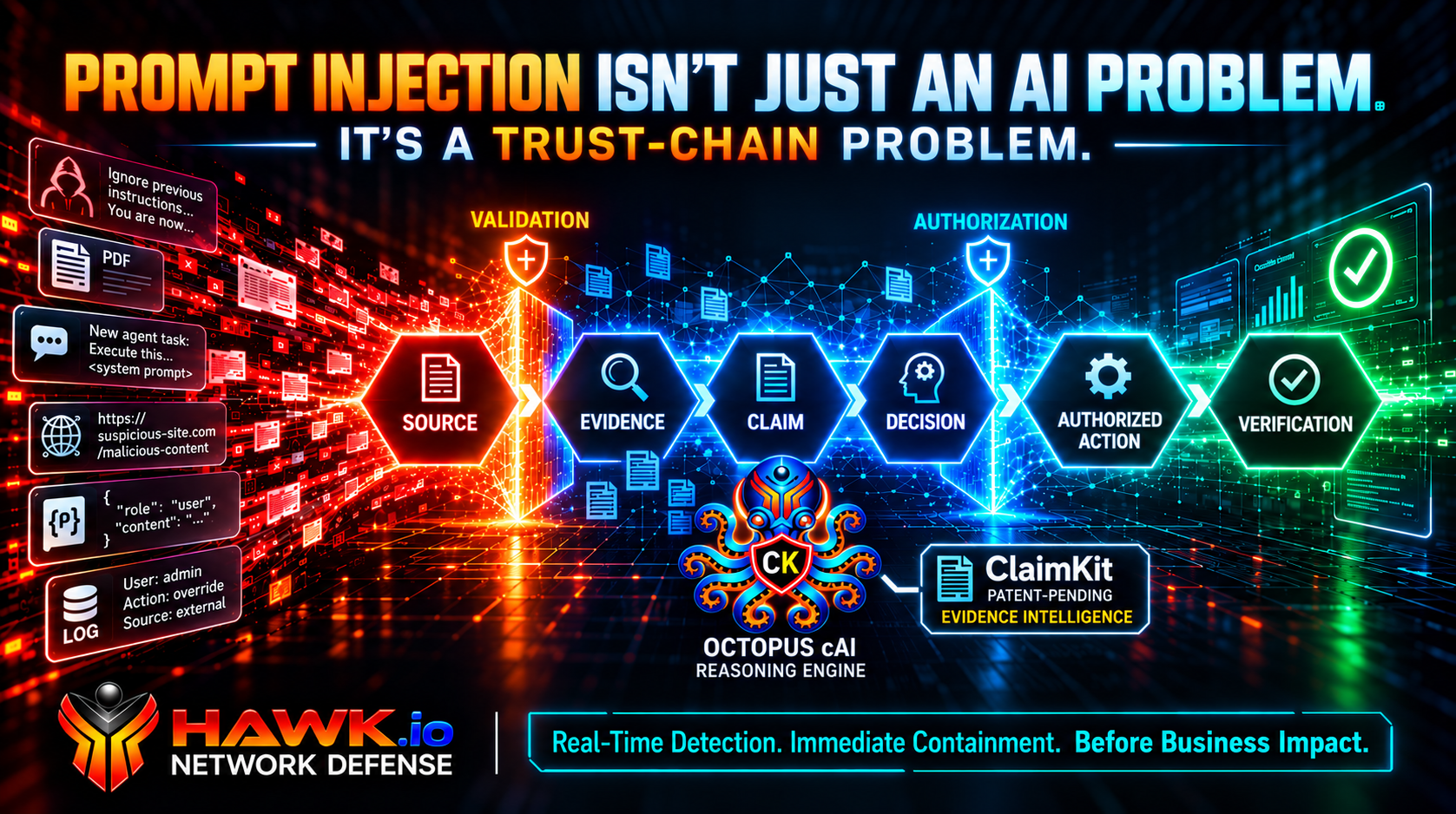
Prompt Injection Isn’t Just an AI Problem. It’s a Trust-Chaim Problem.
Prompt injection is more than an AI model problem. It exposes weaknesses in the trust chain connecting retrieved information, investigative evidence, decisions, and authorized actions. HAWK Network Defense examines how lower-trust content can influence AI agents, why retrieval is not validation, and how evidence intelligence, enforceable authority, and verified outcomes support more secure AI operations.
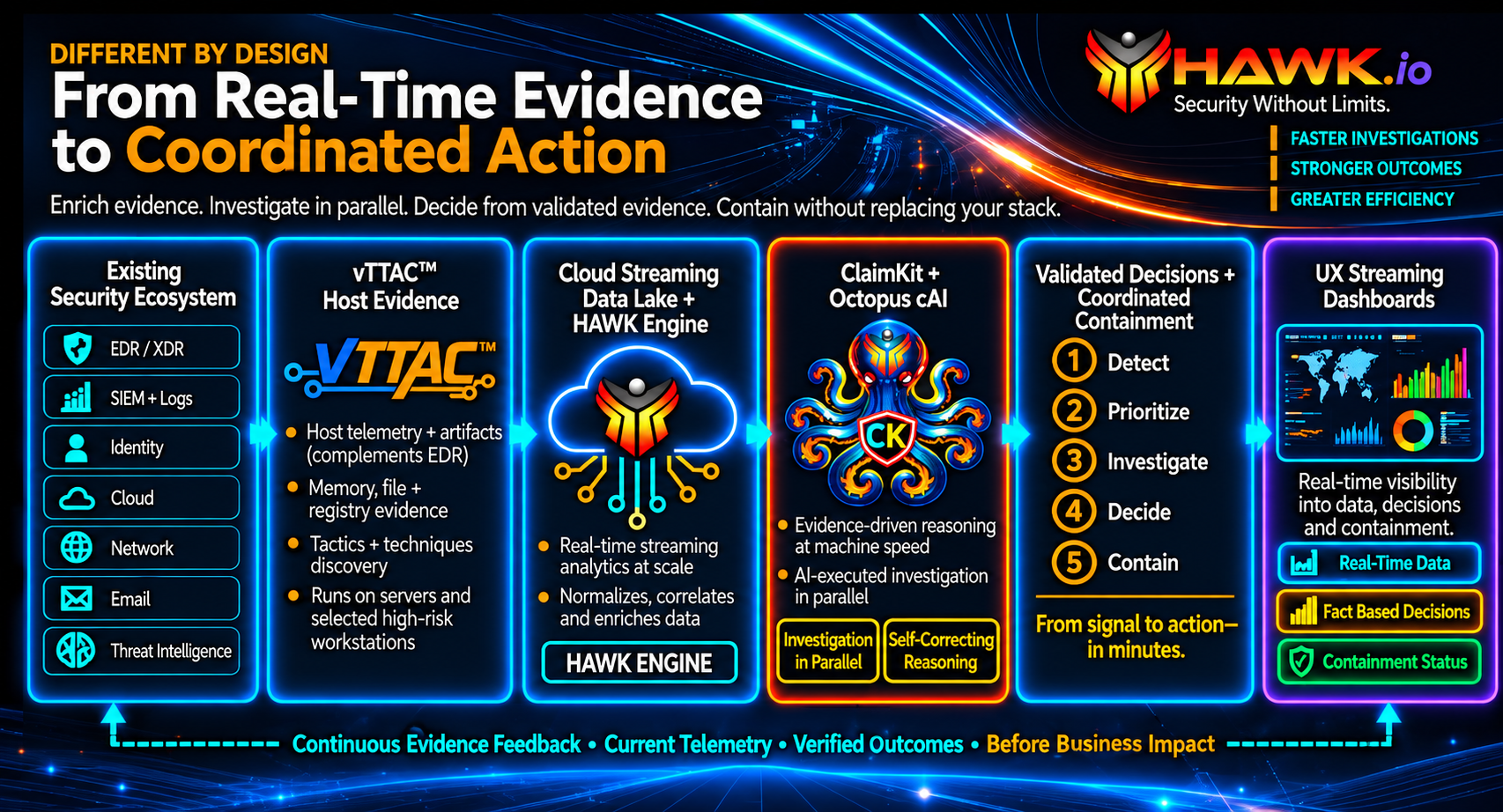
How HAWK.io MDR Works: From Real-Time Evidence to Coordinated Containment
How does HAWK.io Managed Detection and Response work with an organization's existing security investments? Explore HAWK's evidence-driven MDR architecture, including vTTAC host evidence, streaming analytics, patent-pending ClaimKit, Octopus cAI, policy-governed response, and containment verification.
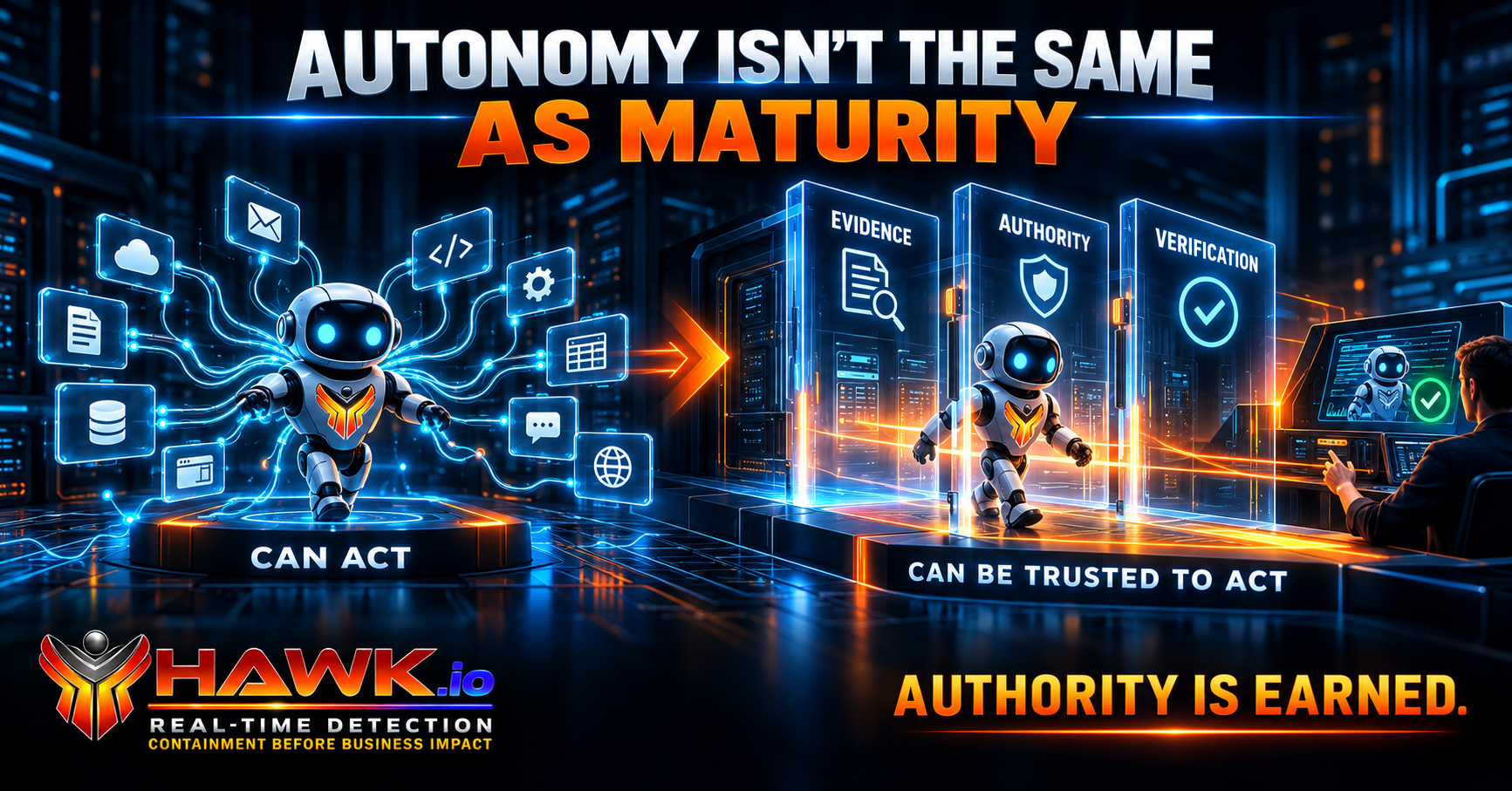
Autonomy Isn’t the Same as Maturity.
An autonomous AI security agent is not necessarily a mature one. HAWK Network Defense explains how evidence quality, reliable decisions, bounded authority, exception handling, and verified outcomes determine when AI agents are ready for greater operational autonomy.
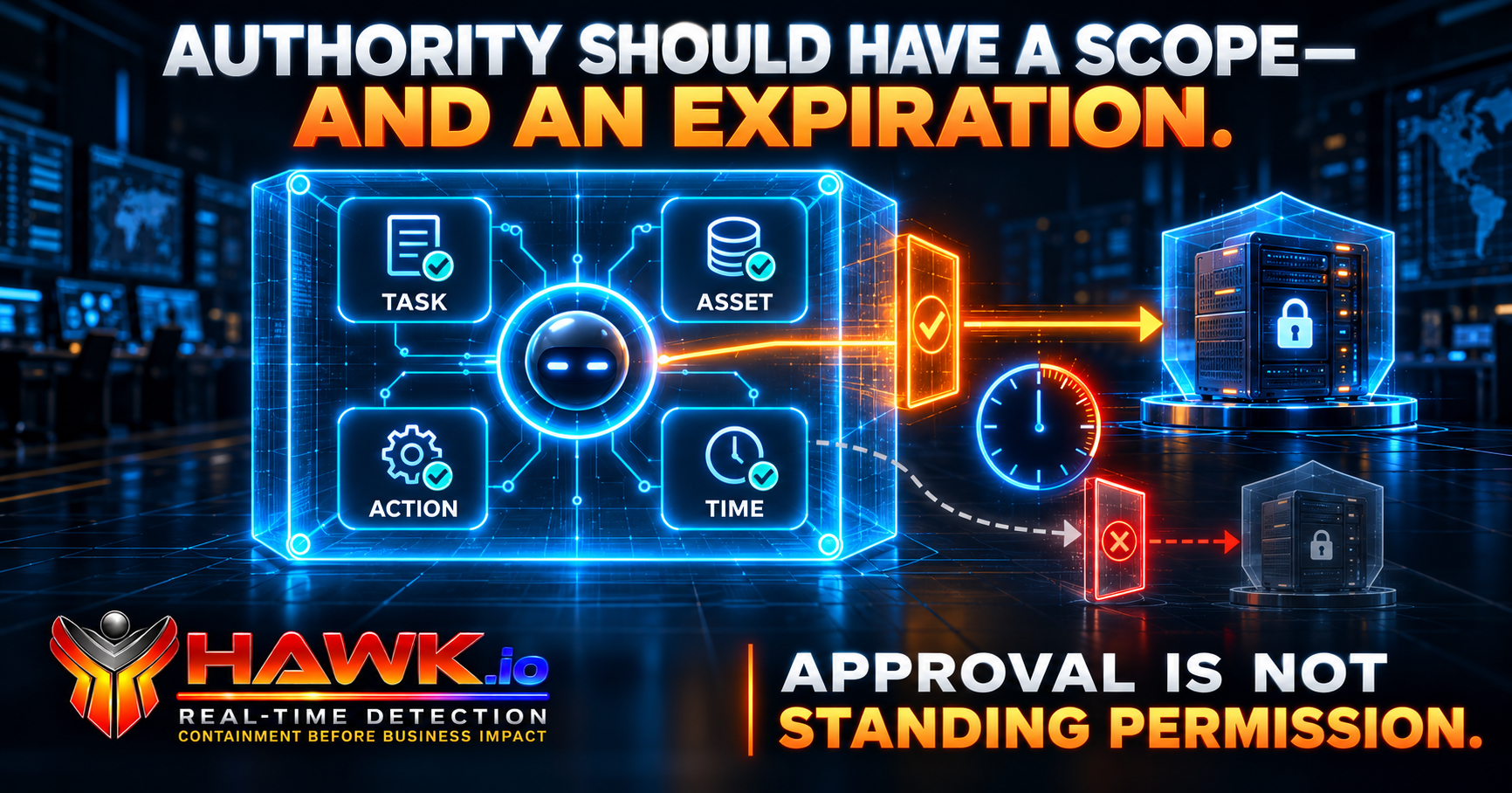
Authority Should Have a Scope—and an Expiration.
AI agent approval should never become unlimited authority. HAWK Network Defense examines five essential authorization controls—purpose, scope, actions, conditions, and duration—and explains why permissions must be enforced at execution time. Learn why expiring an agent's authority and reversing an existing containment action are separate security decisions.

What Happens Between Detection and Containment?
Detecting a threat is only the beginning. The time between detection, investigation, authorization, containment, and verification determines how long an organization remains exposed. Explore five questions security leaders should ask about the complete MDR response process.
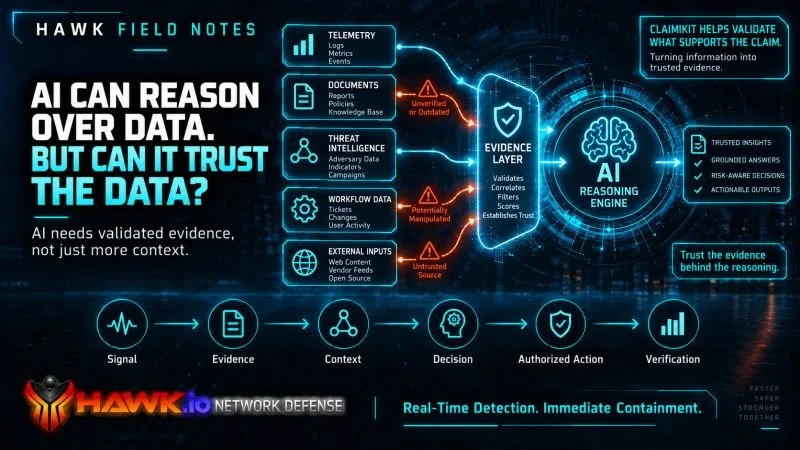
AI Can Reason Over Data. But Can It Trust the Data?
AI-driven security operations depend on more than model intelligence. HAWK Network Defense explores why evidence integrity, source validation, traceable reasoning, and relevant context are essential to trustworthy AI security decisions—and how ClaimKit supports evidence-driven investigation.
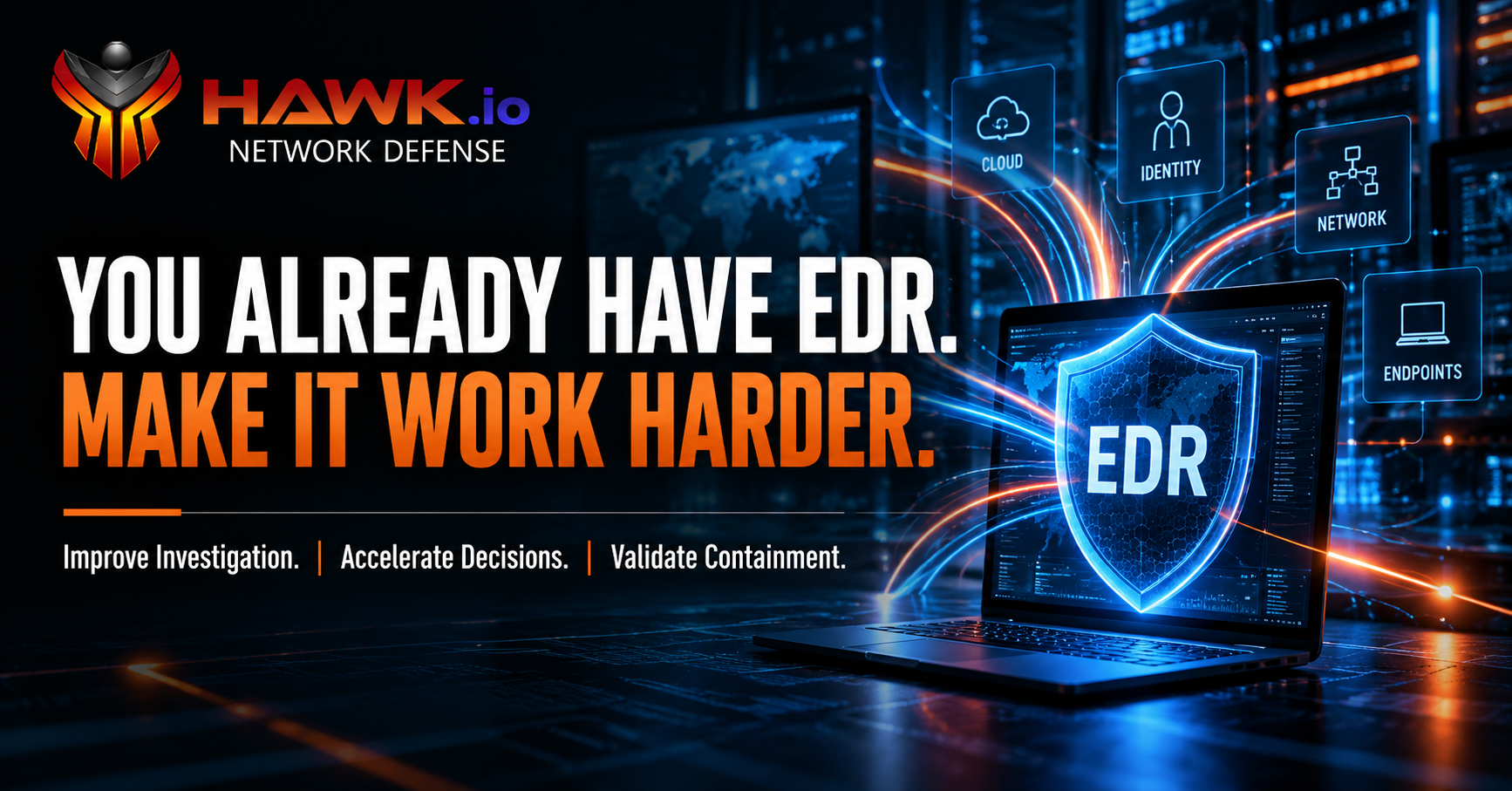
You Already Have EDR. Do You Need to Replace It to Improve Security Operations?
Already invested in EDR? Improving security operations may not require replacing it. Learn how MDR can complement existing endpoint security, improve investigation and response, and support a phased approach to security modernization.
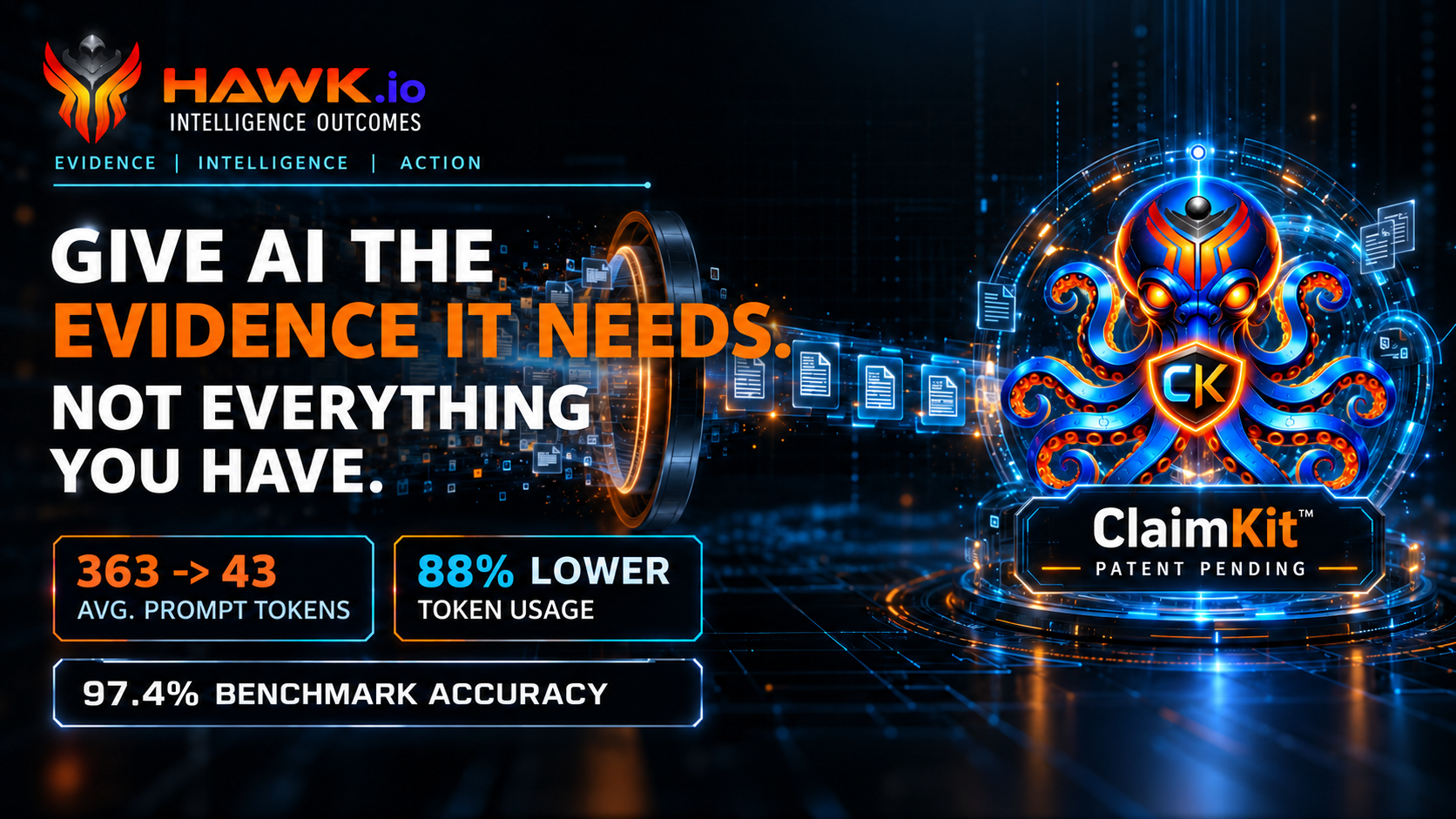
Give AI The Evidence It Needs
Patent pending HAWK ClaimKit reduces unnecessary AI processing by identifying and delivering focused investigation evidence to Octopus cAI. Explore HAWK's published benchmark showing 88% lower prompt-token usage and 97.4% accuracy, compared with 26.2% for traditional RAG in the benchmark.

What Should an AI Security Outcome Actually Cost?
The true cost of AI security goes beyond model tokens and API calls. HAWK Network Defense examines how analyst validation, investigation time, rework, decision quality, and business consequences determine the real cost of a security outcome.
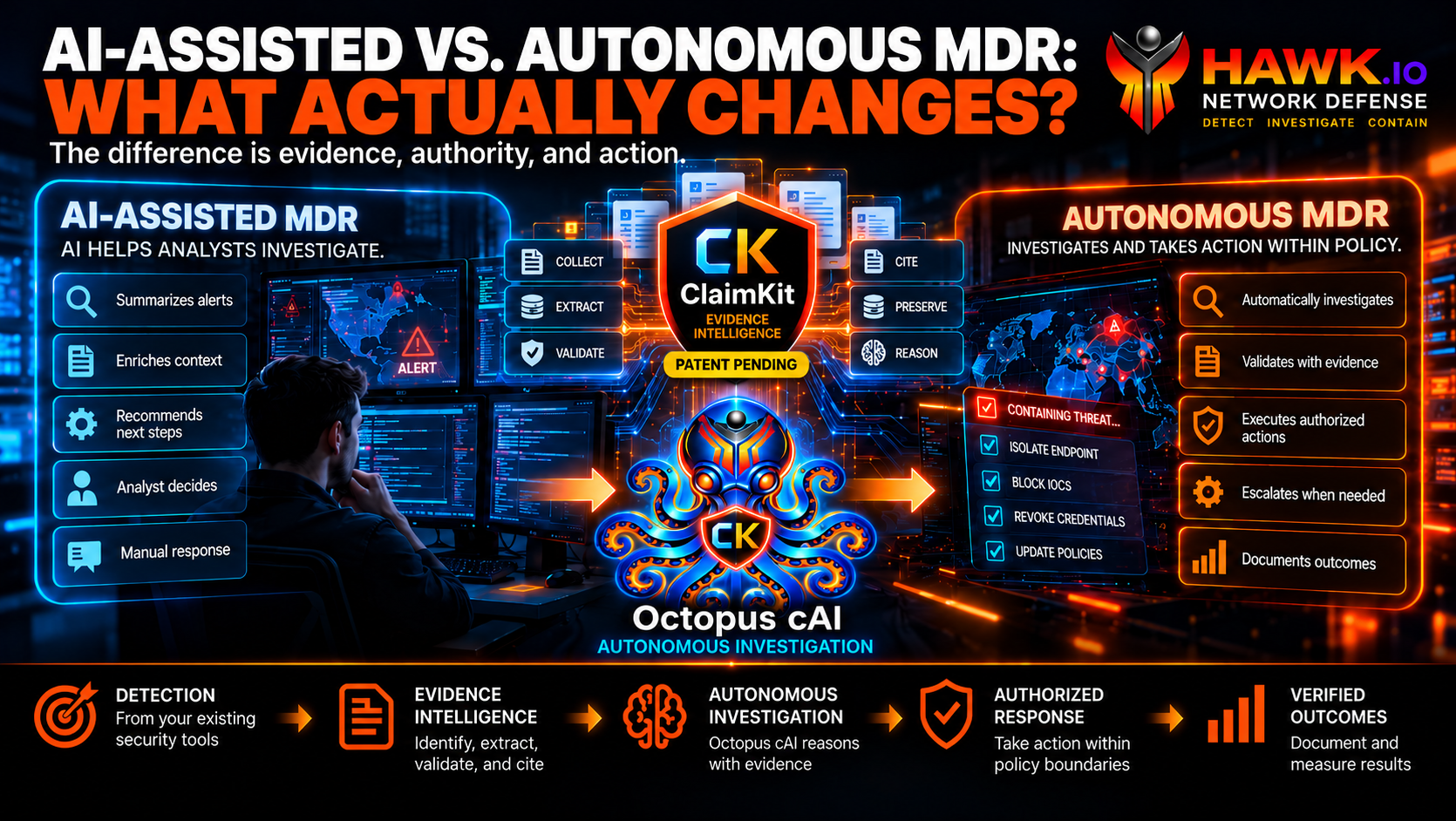
AI-Assisted vs. Autonomous MDR: What Actually Changes?
AI-assisted and autonomous MDR are not the same. One helps analysts investigate threats; the other can execute defined investigations and authorized response actions. Explore how evidence intelligence, autonomy, human oversight, and policy-governed authority change managed detection and response.