



What Happens Between Detection and Containment?
Detecting a threat is only the beginning. The time between detection, investigation, authorization, containment, and verification determines how long an organization remains exposed. Explore five questions security leaders should ask about the complete MDR response process.
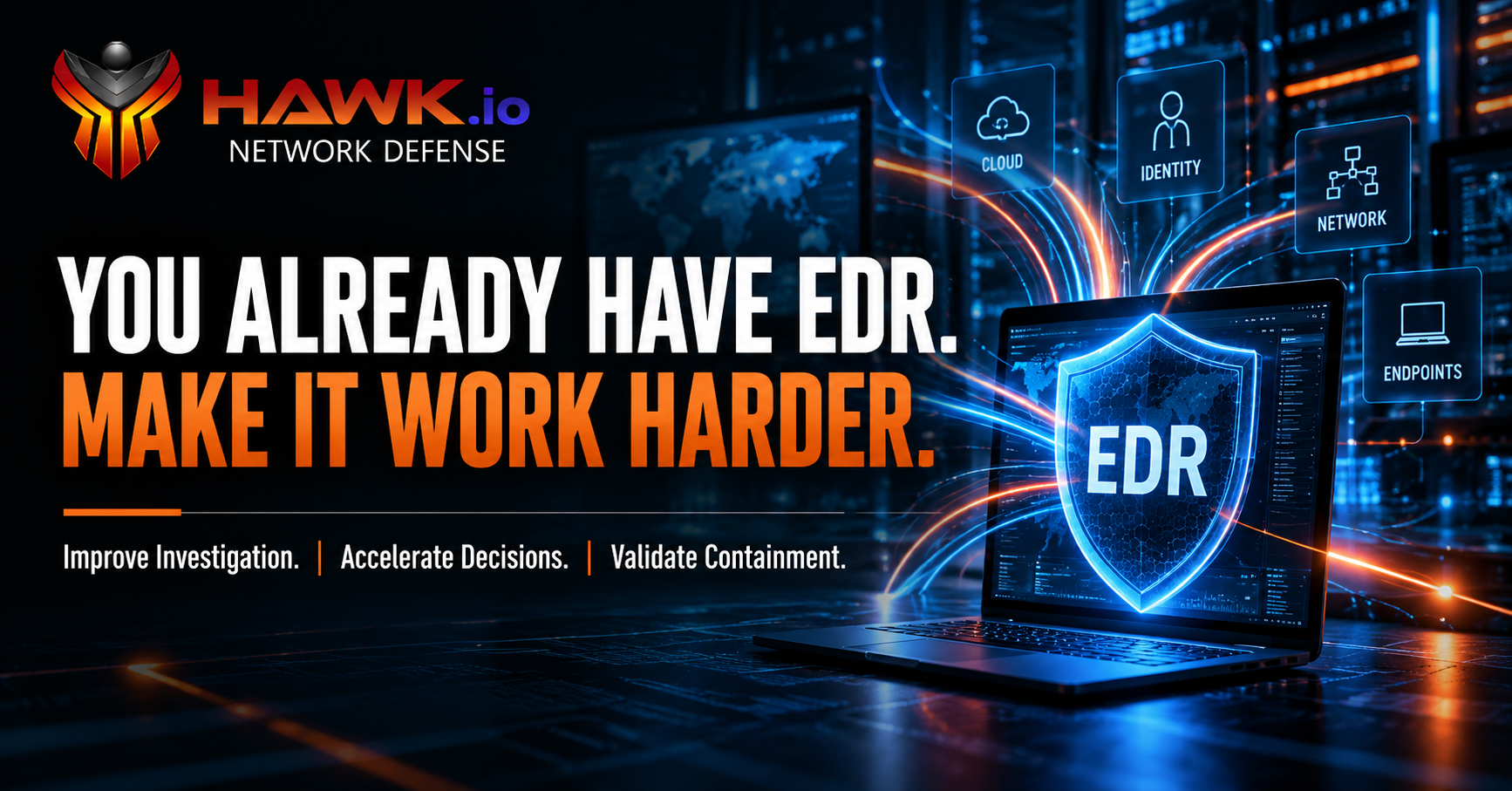
You Already Have EDR. Do You Need to Replace It to Improve Security Operations?
Already invested in EDR? Improving security operations may not require replacing it. Learn how MDR can complement existing endpoint security, improve investigation and response, and support a phased approach to security modernization.

AI-Driven MDR: From Threat Detection to Validated Containment
AI-driven MDR should do more than detect threats. Discover how validated evidence, autonomous investigation, and authorized containment help security teams move from alerts to measurable outcomes.

Attackers Are Moving at Machine Speed. Is Your Security Operation Still Waiting on People?
Cyber threats can move faster than traditional security approval processes. David Harris examines why decision latency, manual handoffs, and unclear response authority can leave organizations exposed—and how AI-driven MDR, governed automation, and executive accountability can improve security outcomes.

Containment at Machine Speed
Fast threat detection means little when containment takes hours. Tim Shelton examines three levels of security automation, how to establish response authority, why containment must be verified, and how AI-driven security operations can reduce decision latency without sacrificing human control.

When the Security Stack Sees the Attach but Can’t Stop it
The October 8, 2026, advisory on China-linked intrusion activity demonstrates how attackers exploit gaps between security technologies. HAWK examines why detecting reconnaissance, compromised identities, and persistent access is not enough—and why coordinated investigations, authorized response, and verified containment matter.

Can Your Security Stack Actually Execute the Decision?
Detecting a cyber threat is only the beginning. HAWK Network Defense examines the operational gap between security decisions and response execution, including evidence gathering, authorization, automated containment, and verification. Learn five questions security leaders can use to evaluate whether their existing security stack can act when it matters.

Your EDR Sees the Endpoint. The Attack Sees the Environment.
EDR is essential, but modern cyberattacks extend beyond individual endpoints. HAWK Network Defense examines why security teams need broader identity, network, cloud, and business context to investigate threats effectively—and how coordinated security operations and AI-driven MDR can extend existing EDR investments without requiring wholesale replacement.

Security Visibility vs. Decision Context: Why More Data Isn't Enough
More security data does not automatically lead to better security decisions. HAWK Network Defense examines the difference between visibility and decision context, including validated evidence, business criticality, decision latency, authorized response, and verified containment.