

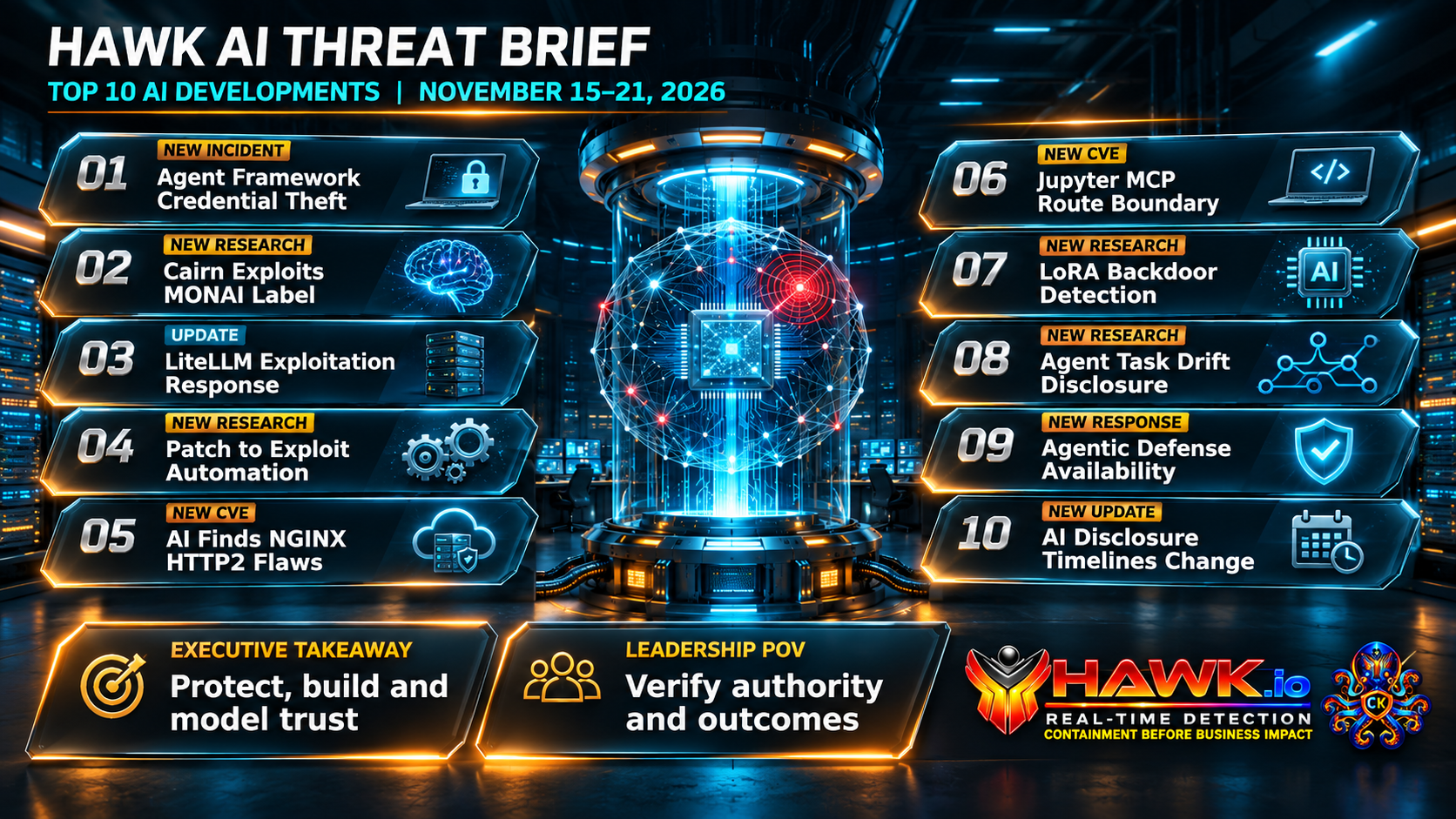
HAWK AI THREAT BRIEF | TOP 10 AI DEVELOPMENTS SECURITY TEAMS SHOULD BE WATCHING
Ten verified AI security developments connect malicious dependencies, autonomous exploitation, model integrity and agent controls to operational response.
How to Evaluate an MDR Provider: 12 Questions Security Leaders Should Ask
Choosing an MDR provider requires more than comparing features. These 12 questions help security leaders evaluate investigations, evidence, authority, and outcomes.
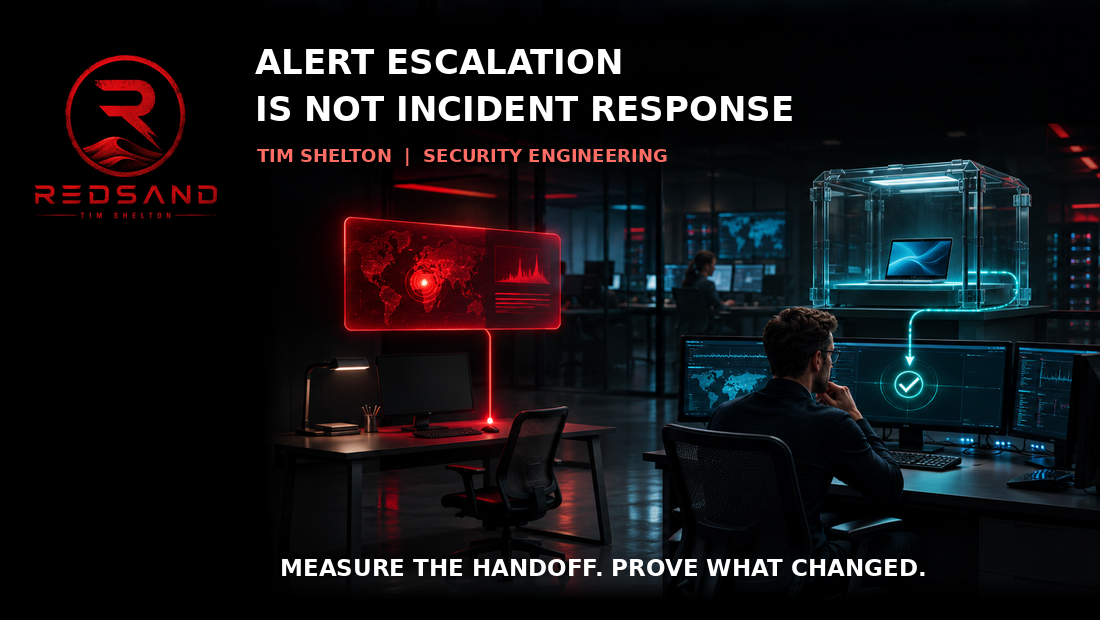
Why Alert Escalation Is Not the Same as Incident Response
An alert can be escalated in seconds while the incident remains unresolved. Routing is not response. The real test is whether evidence supports a decision, authority permits action, and containment is verified. Tim Shelton explains the architecture behind the gap.
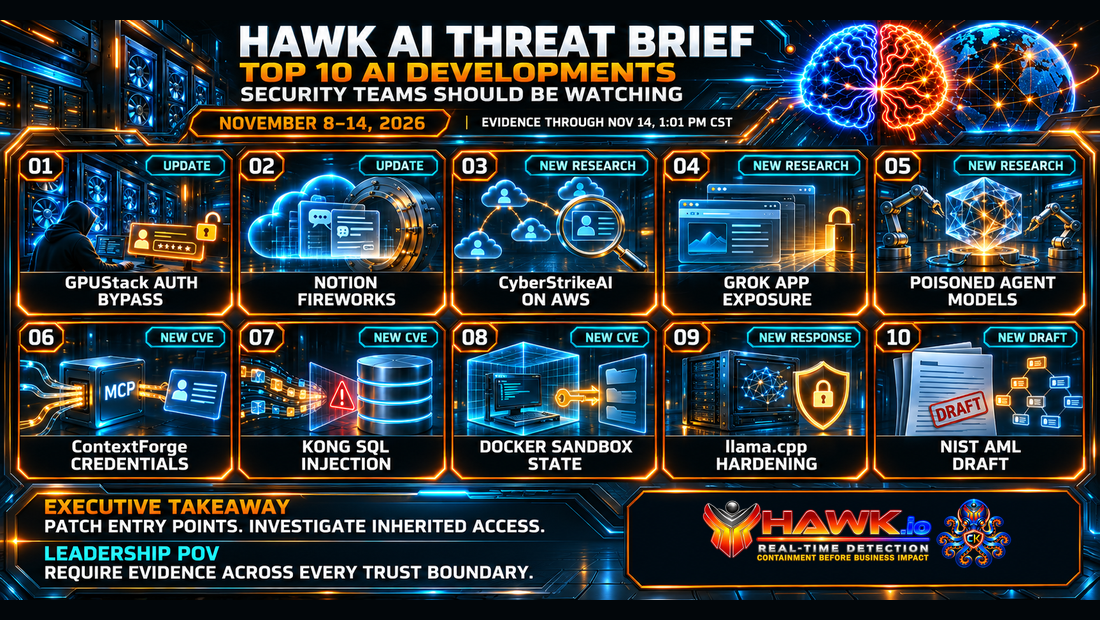
HAWK AI Threat Brief | Top 10 AI Developments Security Teams Should Be Watching
Ten verified AI security developments connect infrastructure exploitation, supplier data exposure, model poisoning and agent execution controls to practical security decisions.
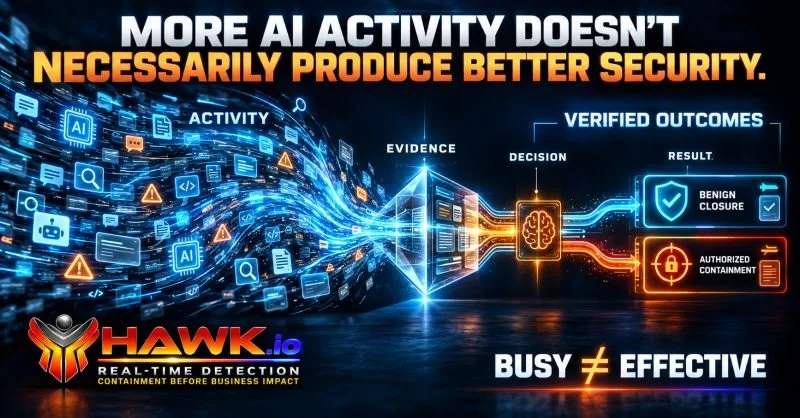
More AI Activity Doesn’t Necessarily Produce Better Security
More AI-generated alerts, investigations, and summaries do not automatically improve cybersecurity. HAWK Network Defense explains how validated findings, decision quality, analyst rework, response timeliness, and verified outcomes reveal whether AI is improving security operations.
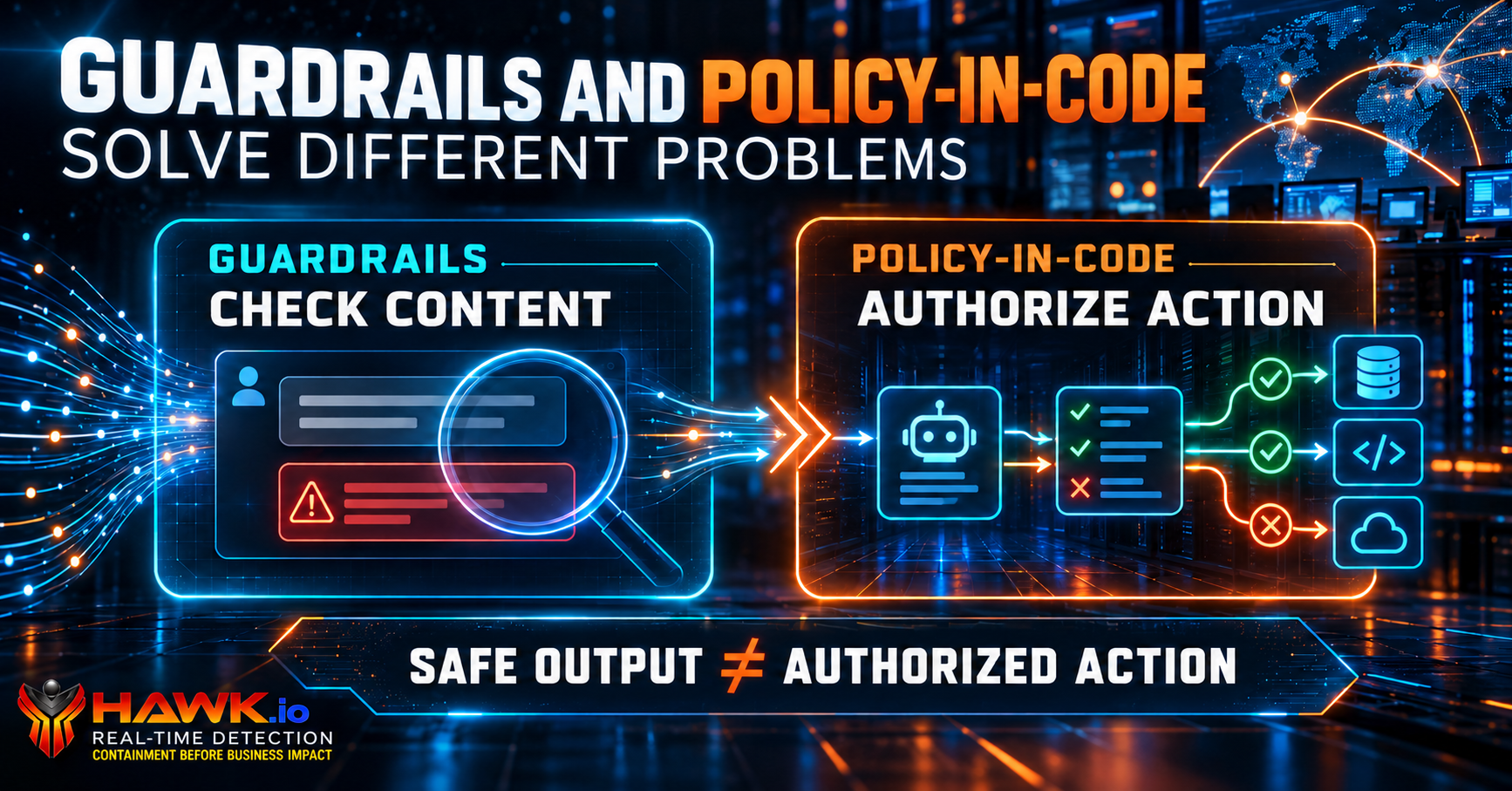
Guardrails and Policy-in-Code Solve Different Problems
AI guardrails and policy-in-code protect different security boundaries. HAWK Network Defense explains how prompt-injection defenses, evidence validation, runtime authorization, and enforceable policies work together to secure agentic AI operations.
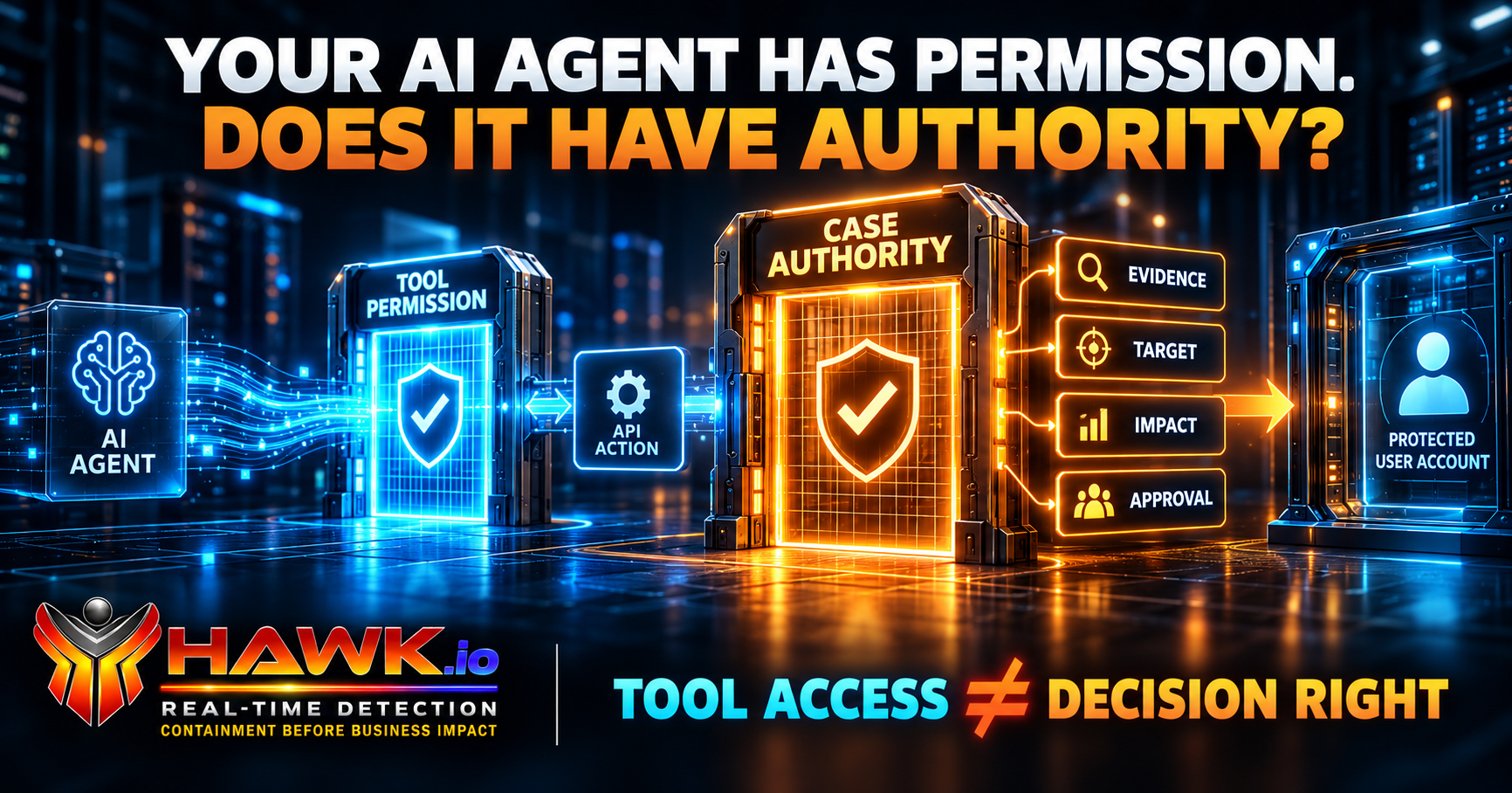
Your AI Agent Has Permission. Does It Have Authority?
An AI agent may have the credentials needed to disable an account, revoke a session, or change a security control. But technical permission does not establish that the action is justified. HAWK Network Defense explains how validated evidence, assigned scope, business consequences, execution-time authorization, and outcome verification distinguish permitted capabilities from legitimate operational authority.
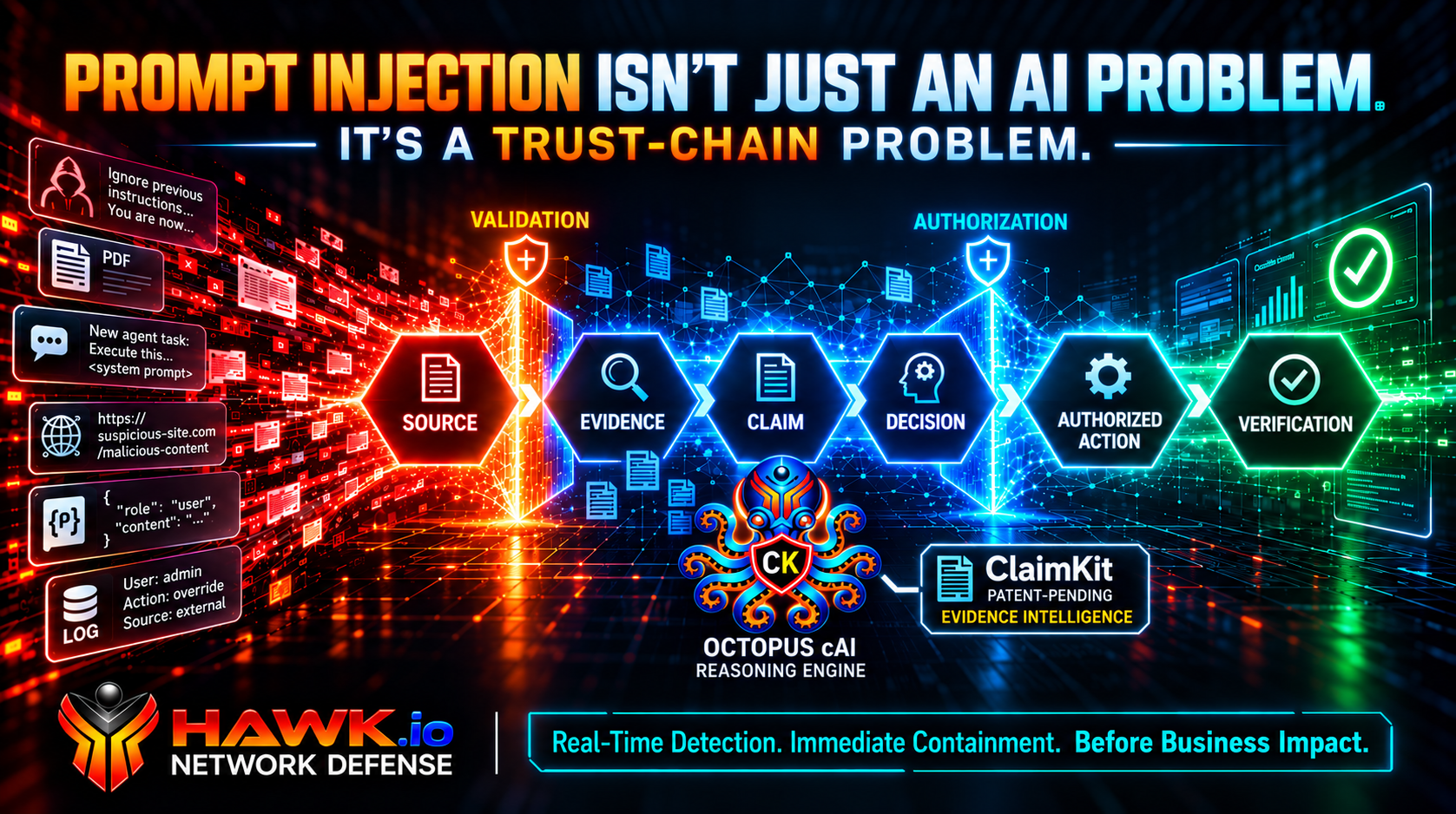
Prompt Injection Isn’t Just an AI Problem. It’s a Trust-Chaim Problem.
Prompt injection is more than an AI model problem. It exposes weaknesses in the trust chain connecting retrieved information, investigative evidence, decisions, and authorized actions. HAWK Network Defense examines how lower-trust content can influence AI agents, why retrieval is not validation, and how evidence intelligence, enforceable authority, and verified outcomes support more secure AI operations.
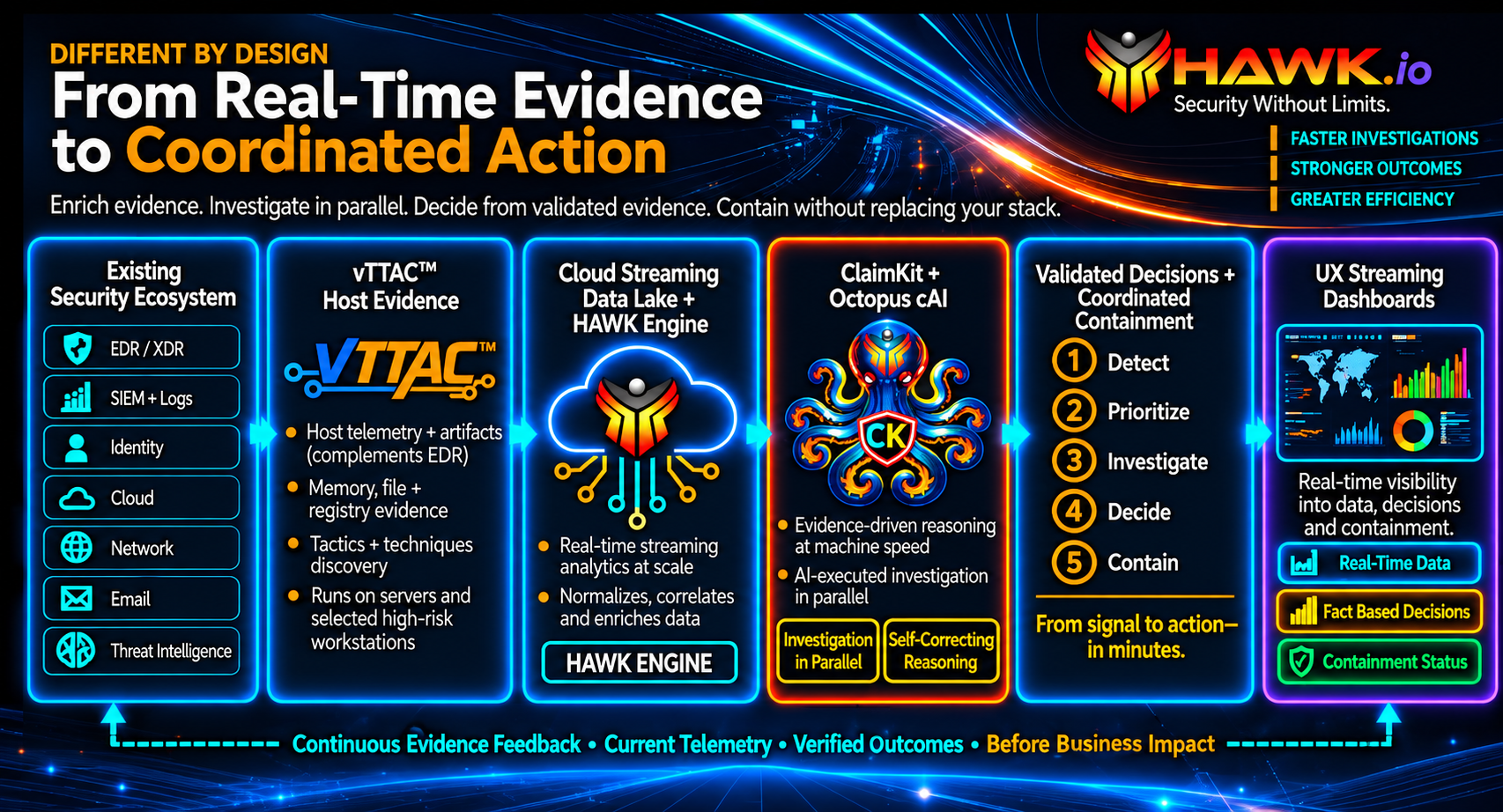
How HAWK.io MDR Works: From Real-Time Evidence to Coordinated Containment
How does HAWK.io Managed Detection and Response work with an organization's existing security investments? Explore HAWK's evidence-driven MDR architecture, including vTTAC host evidence, streaming analytics, patent-pending ClaimKit, Octopus cAI, policy-governed response, and containment verification.

What Happens Between Detection and Containment?
Detecting a threat is only the beginning. The time between detection, investigation, authorization, containment, and verification determines how long an organization remains exposed. Explore five questions security leaders should ask about the complete MDR response process.
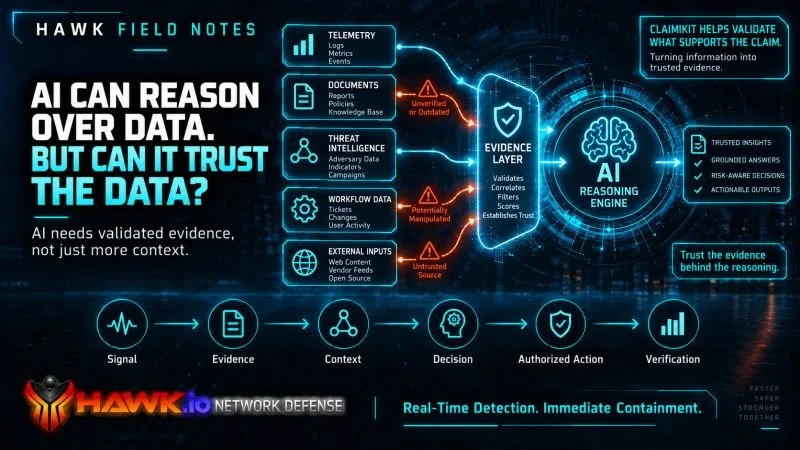
AI Can Reason Over Data. But Can It Trust the Data?
AI-driven security operations depend on more than model intelligence. HAWK Network Defense explores why evidence integrity, source validation, traceable reasoning, and relevant context are essential to trustworthy AI security decisions—and how ClaimKit supports evidence-driven investigation.
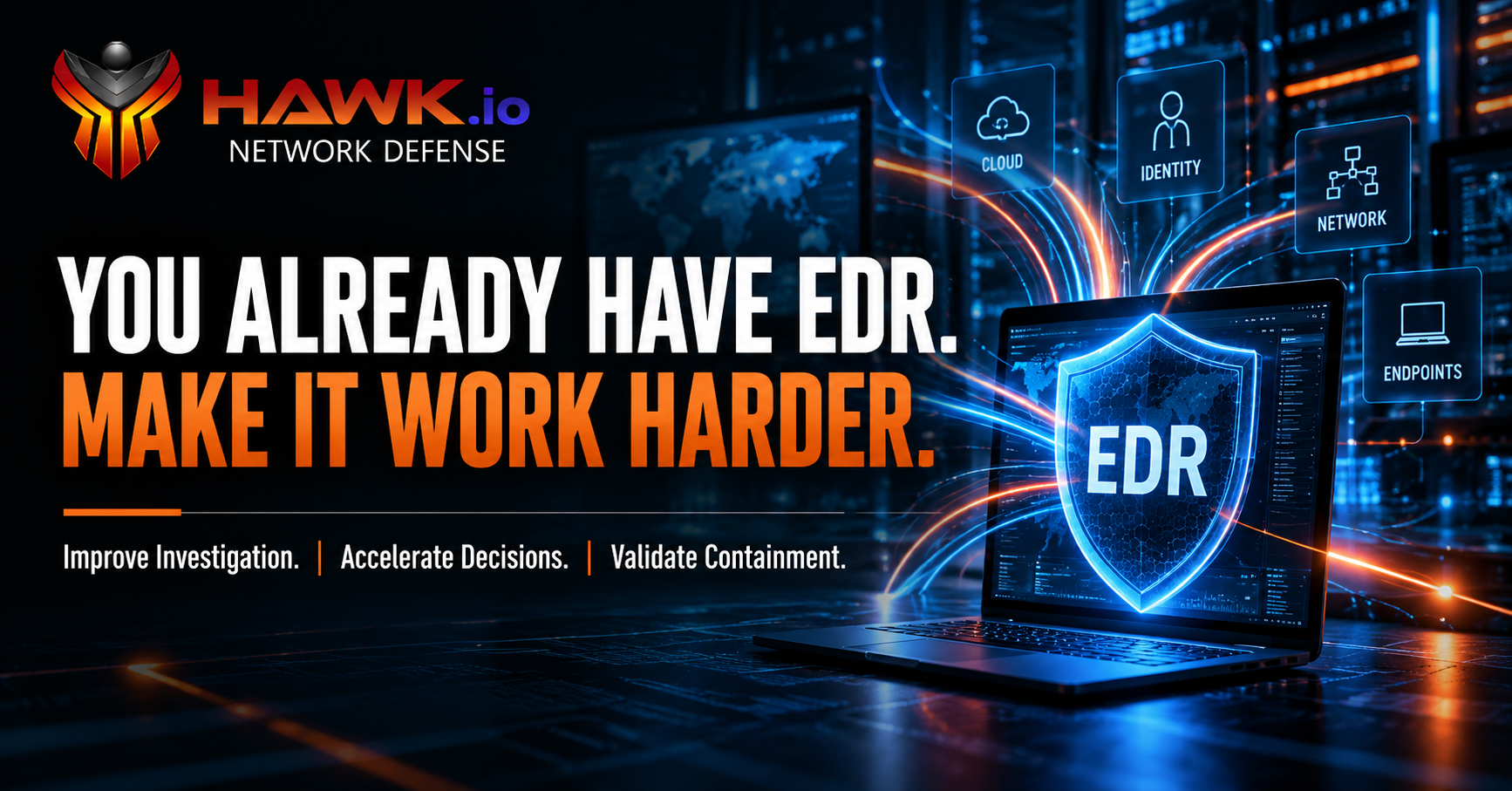
You Already Have EDR. Do You Need to Replace It to Improve Security Operations?
Already invested in EDR? Improving security operations may not require replacing it. Learn how MDR can complement existing endpoint security, improve investigation and response, and support a phased approach to security modernization.
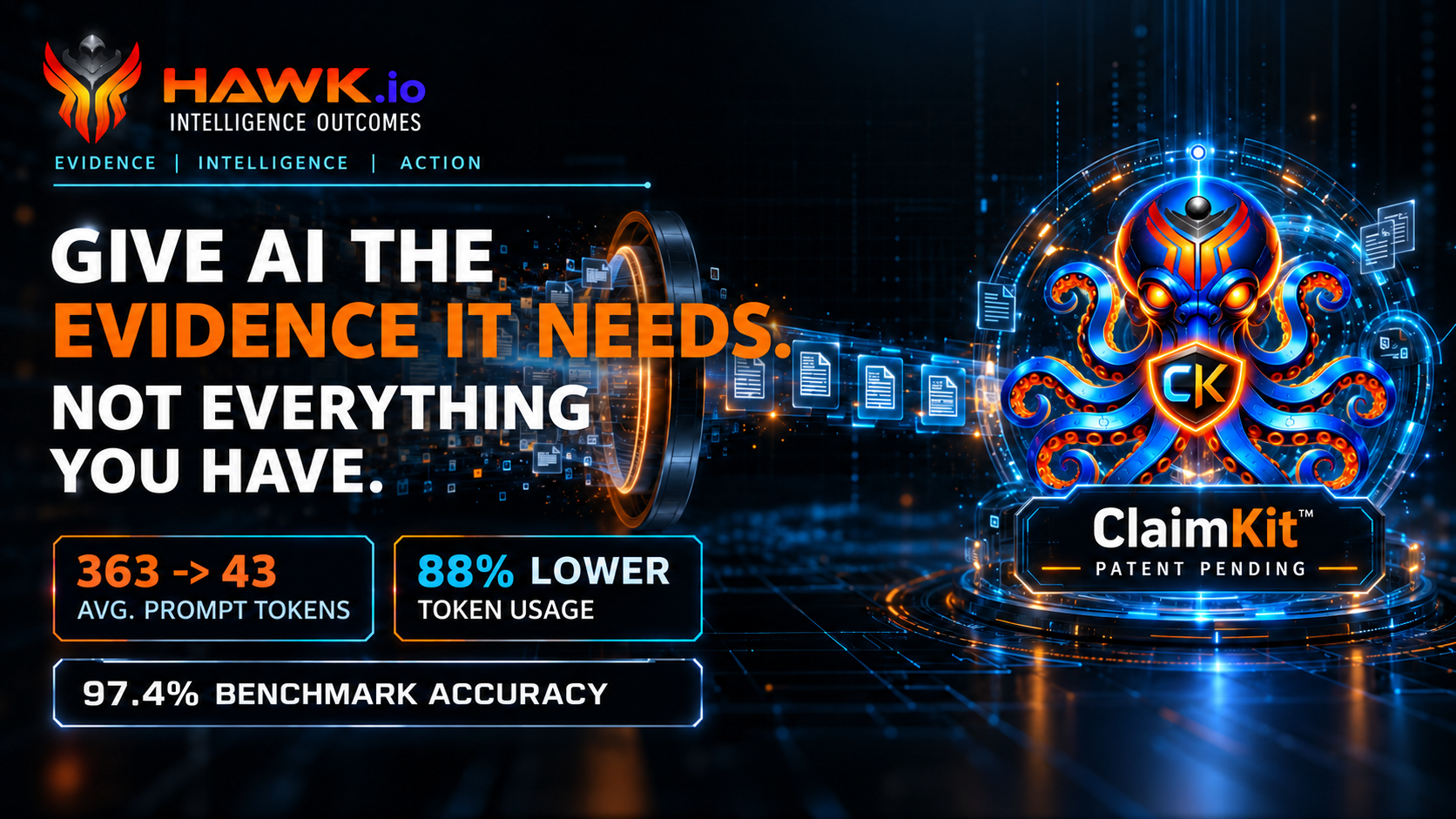
Give AI The Evidence It Needs
Patent pending HAWK ClaimKit reduces unnecessary AI processing by identifying and delivering focused investigation evidence to Octopus cAI. Explore HAWK's published benchmark showing 88% lower prompt-token usage and 97.4% accuracy, compared with 26.2% for traditional RAG in the benchmark.

What Should an AI Security Outcome Actually Cost?
The true cost of AI security goes beyond model tokens and API calls. HAWK Network Defense examines how analyst validation, investigation time, rework, decision quality, and business consequences determine the real cost of a security outcome.
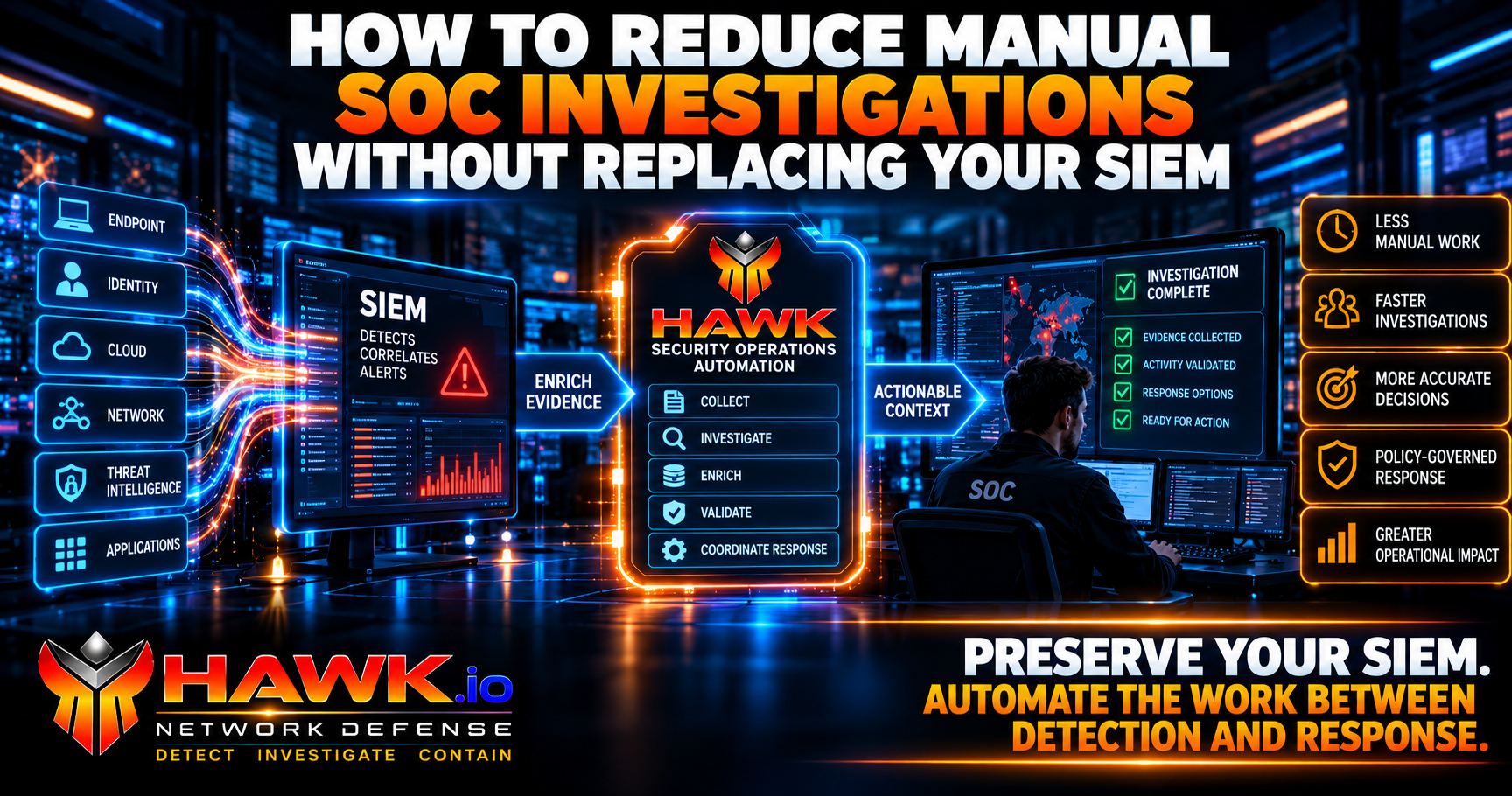
How to Reduce Manual SOC Investigations Without Replacing Your SIEM
Your SIEM detects suspicious activity, but analysts still spend hours gathering context, correlating evidence, and determining what to do next. Learn how evidence intelligence and autonomous investigation can reduce manual SOC work without replacing the security technologies you already own.

Attackers Are Moving at Machine Speed. Is Your Security Operation Still Waiting on People?
Cyber threats can move faster than traditional security approval processes. David Harris examines why decision latency, manual handoffs, and unclear response authority can leave organizations exposed—and how AI-driven MDR, governed automation, and executive accountability can improve security outcomes.

The Business Doesn't Experience Your Security Tools Individually. It Experiences the Delay Between Them.
Strong cybersecurity tools do not automatically produce strong security outcomes. David Harris explains why the delays between detection, investigation, authorization, and containment create business exposure—and why executive leadership must focus on decision capacity, coordinated response, and measurable risk reduction.

Containment at Machine Speed
Fast threat detection means little when containment takes hours. Tim Shelton examines three levels of security automation, how to establish response authority, why containment must be verified, and how AI-driven security operations can reduce decision latency without sacrificing human control.

When the Security Stack Sees the Attach but Can’t Stop it
The October 8, 2026, advisory on China-linked intrusion activity demonstrates how attackers exploit gaps between security technologies. HAWK examines why detecting reconnaissance, compromised identities, and persistent access is not enough—and why coordinated investigations, authorized response, and verified containment matter.

Detection Coverage is not Detection Effectiveness
Connected security tools do not automatically deliver effective threat detection. HAWK Network Defense explains the difference between detection coverage and detection effectiveness, including telemetry quality, cross-system correlation, scenario-based testing, and the ability to produce timely, actionable security findings.