


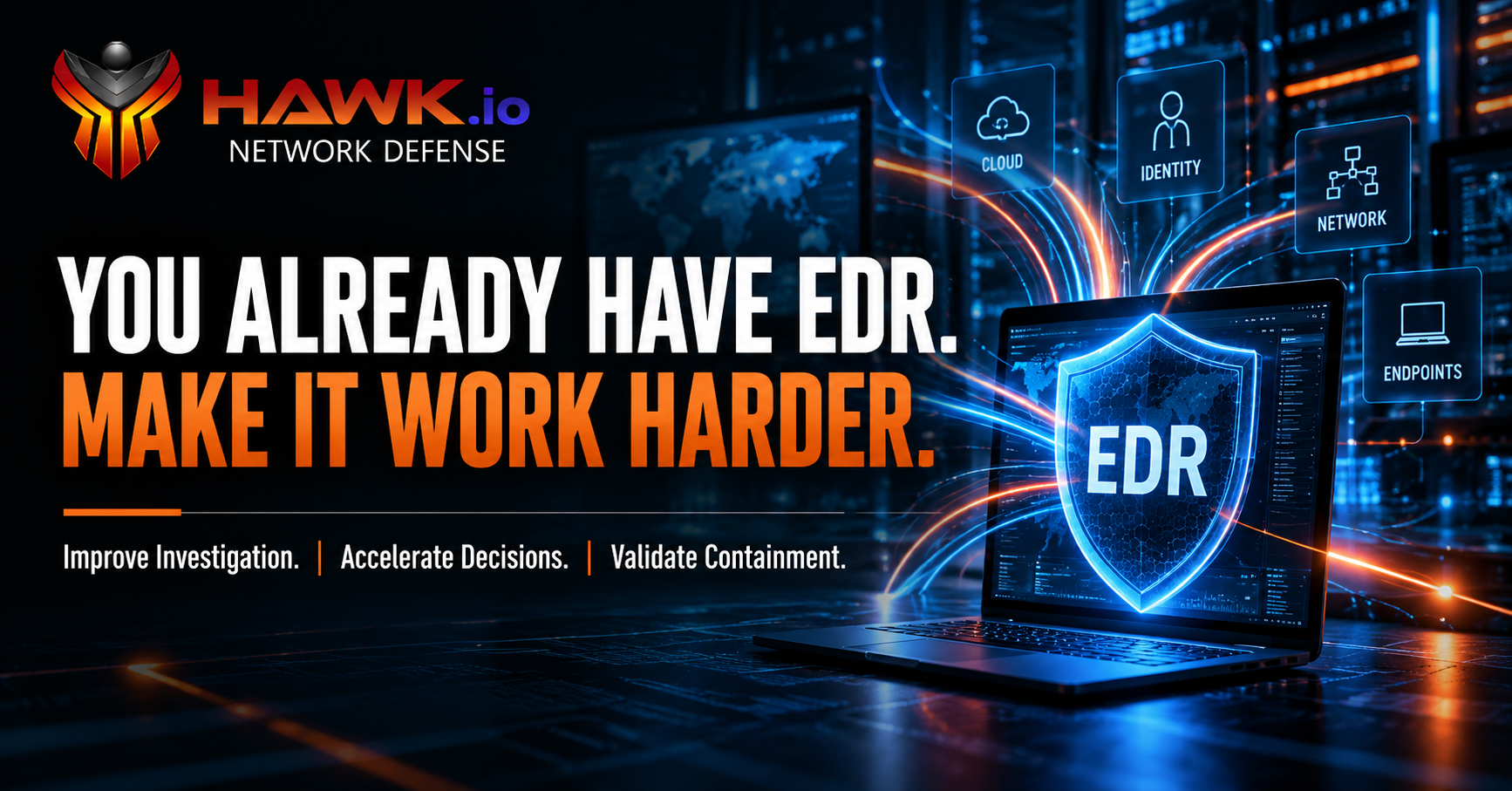
You Already Have EDR. Do You Need to Replace It to Improve Security Operations?
Already invested in EDR? Improving security operations may not require replacing it. Learn how MDR can complement existing endpoint security, improve investigation and response, and support a phased approach to security modernization.
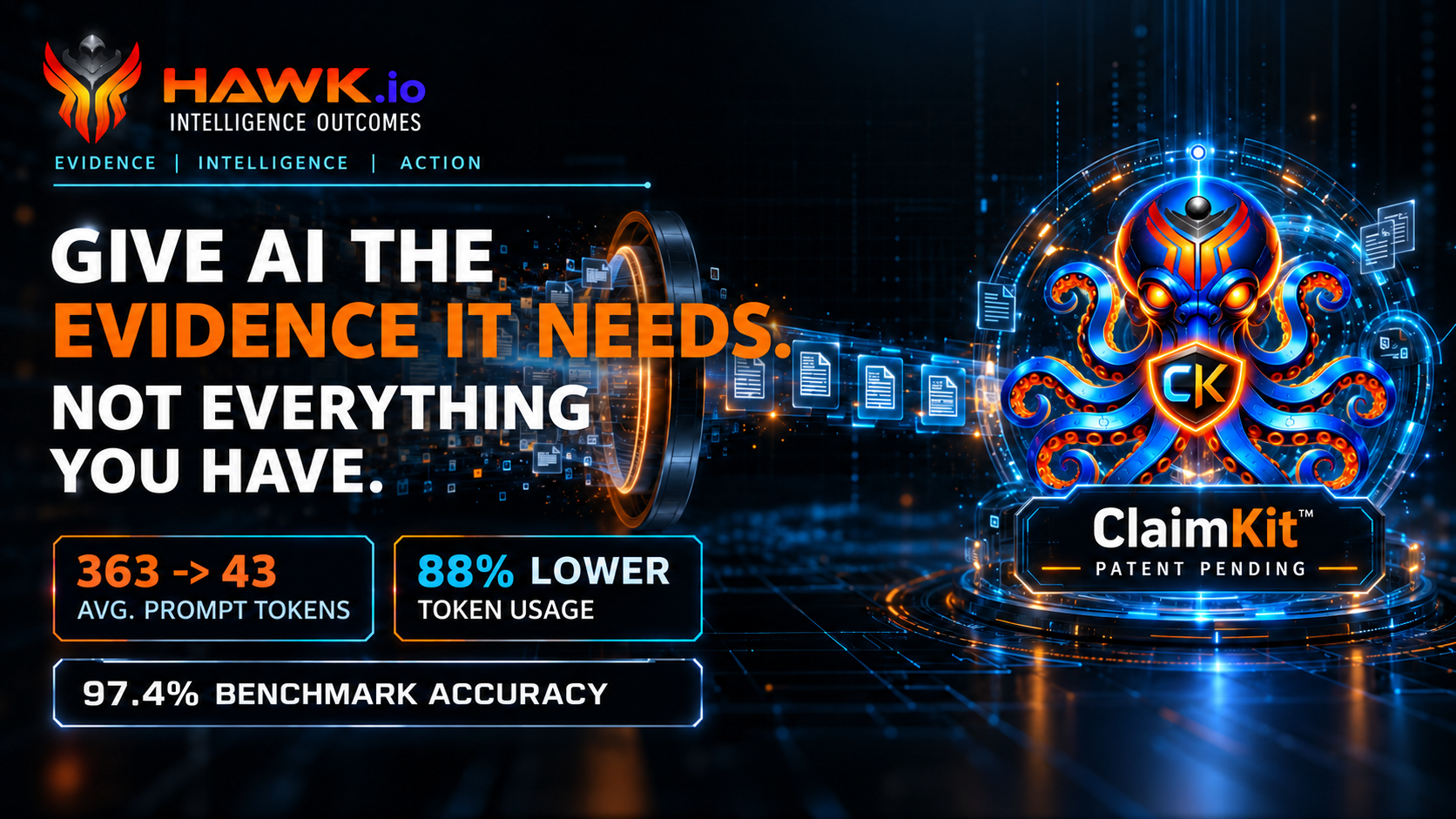
Give AI The Evidence It Needs
Patent pending HAWK ClaimKit reduces unnecessary AI processing by identifying and delivering focused investigation evidence to Octopus cAI. Explore HAWK's published benchmark showing 88% lower prompt-token usage and 97.4% accuracy, compared with 26.2% for traditional RAG in the benchmark.

WHAT SHOULD AN AI SECURITY OUTCOME ACTUALLY COST?
The true cost of AI security goes beyond model tokens and API calls. HAWK Network Defense examines how analyst validation, investigation time, rework, decision quality, and business consequences determine the real cost of a security outcome.
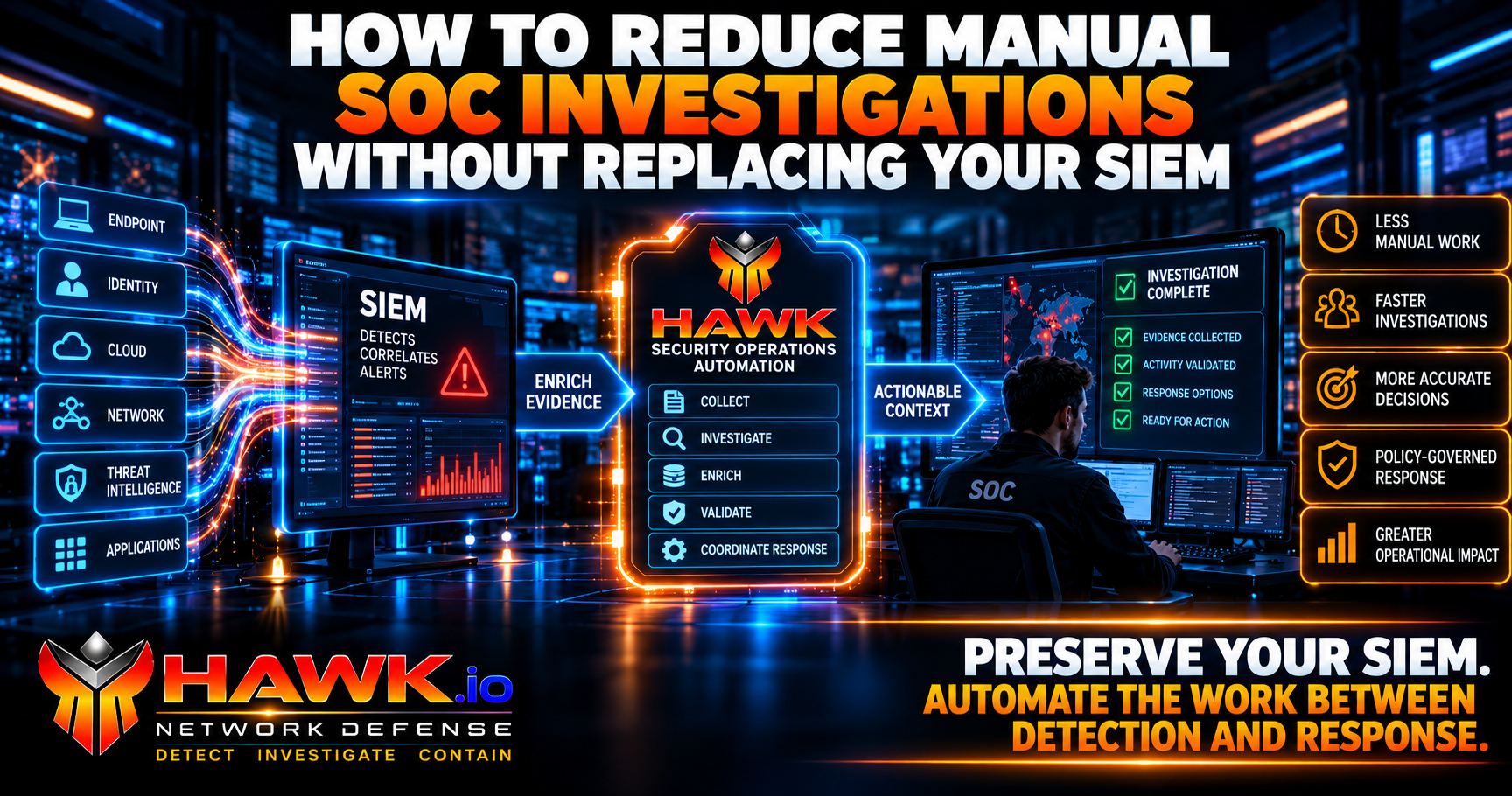
How to Reduce Manual SOC Investigations Without Replacing Your SIEM
Your SIEM detects suspicious activity, but analysts still spend hours gathering context, correlating evidence, and determining what to do next. Learn how evidence intelligence and autonomous investigation can reduce manual SOC work without replacing the security technologies you already own.

Attackers Are Moving at Machine Speed. Is Your Security Operation Still Waiting on People?
Attackers increasingly use automation, while many security operations still depend on manual investigation and approval handoffs. David Harris examines how AI-assisted investigation, evidence-based decisions, bounded automation, and verified containment can reduce decision delays and business exposure.

The Business Doesn't Experience Your Security Tools Individually. It Experiences the Delay Between Them.
Strong cybersecurity tools do not guarantee timely protection. David Harris examines why fragmented workflows, decision delays, unclear authority, and disconnected response processes create business exposure—and why decision capacity deserves executive attention.

Containment at Machine Speed
Detecting a threat in seconds means little if containment takes hours. Tim Shelton, Founder and CTO of HAWK Network Defense, examines decision latency, customer-defined automation, evidence-based response, verified containment, and the cost of AI-driven security operations.

WHEN THE SECURITY STACK SEES THE ATTACK BUT CAN’T STOP IT
China-linked cyber activity highlights a critical security operations challenge: detecting an intrusion is not the same as containing it. HAWK examines the October 8, 2026 advisory and the need to connect network, endpoint, identity, and email evidence to authorized action and verified containment.


CAN YOUR SECURITY STACK ACTUALLY EXECUTE THE DECISION?
Your security stack may detect a threat quickly, but can it execute the response? HAWK Network Defense examines five critical stages—signal, evidence, authority, execution, and verification—and explains how organizations can reduce decision latency, eliminate unnecessary handoffs, and achieve verified threat containment.

Your EDR Sees the Endpoint. The Attack Sees the Environment.
Endpoint Detection and Response (EDR) provides essential endpoint visibility, but modern cyberattacks extend across identities, cloud services, networks, and applications. HAWK Network Defense explains why connecting endpoint evidence with broader security context enables faster investigations, better decisions, and more effective threat containment.

THE AI INSIDER MAY NOT BE HUMAN
The next insider threat may not be human. HAWK Network Defense examines how AI agents expand enterprise insider risk and why securing non-human identities requires defined purpose, scoped permissions, enforceable authority, action monitoring, and verified outcomes.

Security Visibility vs. Decision Context: Why More Data Isn't Enough
More security visibility doesn't automatically produce better security decisions. HAWK Network Defense explains why modern security operations need validated evidence, relevant business context, clearly defined authority, and verified containment to reduce decision latency and respond effectively.

The Future SOC Is a Decision System
The future Security Operations Center must do more than detect threats. David Harris, CEO of HAWK Network Defense, explains why modern SOCs should operate as decision systems that connect trusted evidence, business context, defined authority, coordinated containment, and verified outcomes to reduce business exposure.

Cybersecurity ROI Is Measured in Time, Not Tools
Cybersecurity ROI is not demonstrated by the number of tools deployed or alerts processed. David Harris, CEO of HAWK Network Defense, explains why security investments should reduce investigation delays, accelerate authorized containment, and produce measurable improvements in operational resilience and business risk reduction.

The Future SOC Will Be Built Around Evidence, Not Alerts
The future Security Operations Center (SOC) will be built around evidence, not alert volume. Tim Shelton, Founder and CTO of HAWK Network Defense, examines how AI-assisted investigation, trusted context, and defensible decisions can help security teams move faster from threat detection to authorized action and verified containment.

Your Incident Response Plan May Have a Decision Problem
Your security team may detect an attack in seconds, but unclear decision authority can delay containment for hours. David Harris, CEO of HAWK Network Defense, explains why effective incident response planning requires bounded authority, time-sensitive escalation, human oversight, and verified containment.

More AI Will Not Fix a Poorly Designed SOC
Adding more AI won't fix a poorly designed Security Operations Center (SOC). Tim Shelton, Founder and CTO of HAWK Network Defense, explains why effective AI-driven security operations require trusted context, connected workflows, clearly defined decision authority, and verified containment—not simply faster analysis, more alerts, or additional automation.

What Exploit Research Taught Me About AI Agent Security
After a cybersecurity incident, alert volume tells executives how much work occurred—not whether the threat was contained. David Harris, CEO of HAWK Network Defense, examines why time to verified containment is a more meaningful measure of incident response effectiveness, operational readiness, and business resilience.

Incident Response Metrics: Measure Time to Verified Outcome
After a cybersecurity incident, alert volume tells executives how much work occurred—not whether the threat was contained. David Harris, CEO of HAWK Network Defense, examines why time to verified containment is a more meaningful measure of incident response effectiveness, operational readiness, and business resilience.