


What a Strong AI Agent Authorization Model Requires
A strong AI agent authorization model requires more than credentials and approval workflows. HAWK Network Defense examines five authorization boundaries—purpose, scope, permitted actions, conditions, and duration—and explains how organizations can enforce those boundaries, test for bypass paths, audit consequential actions, and measure whether delegated authority is working as intended.
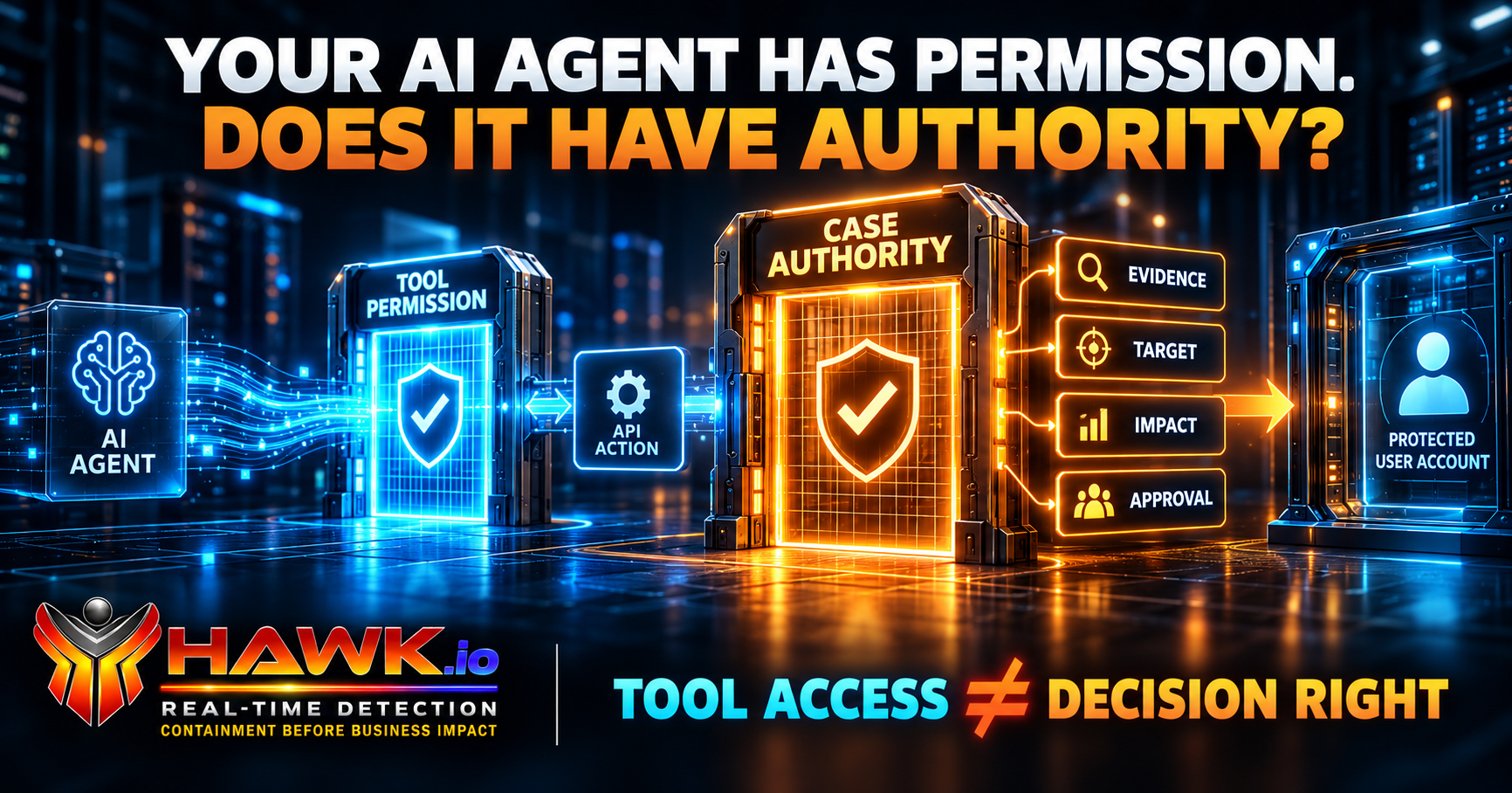
Your AI Agent Has Permission. Does It Have Authority?
An AI agent may have the credentials needed to disable an account, revoke a session, or change a security control. But technical permission does not establish that the action is justified. HAWK Network Defense explains how validated evidence, assigned scope, business consequences, execution-time authorization, and outcome verification distinguish permitted capabilities from legitimate operational authority.
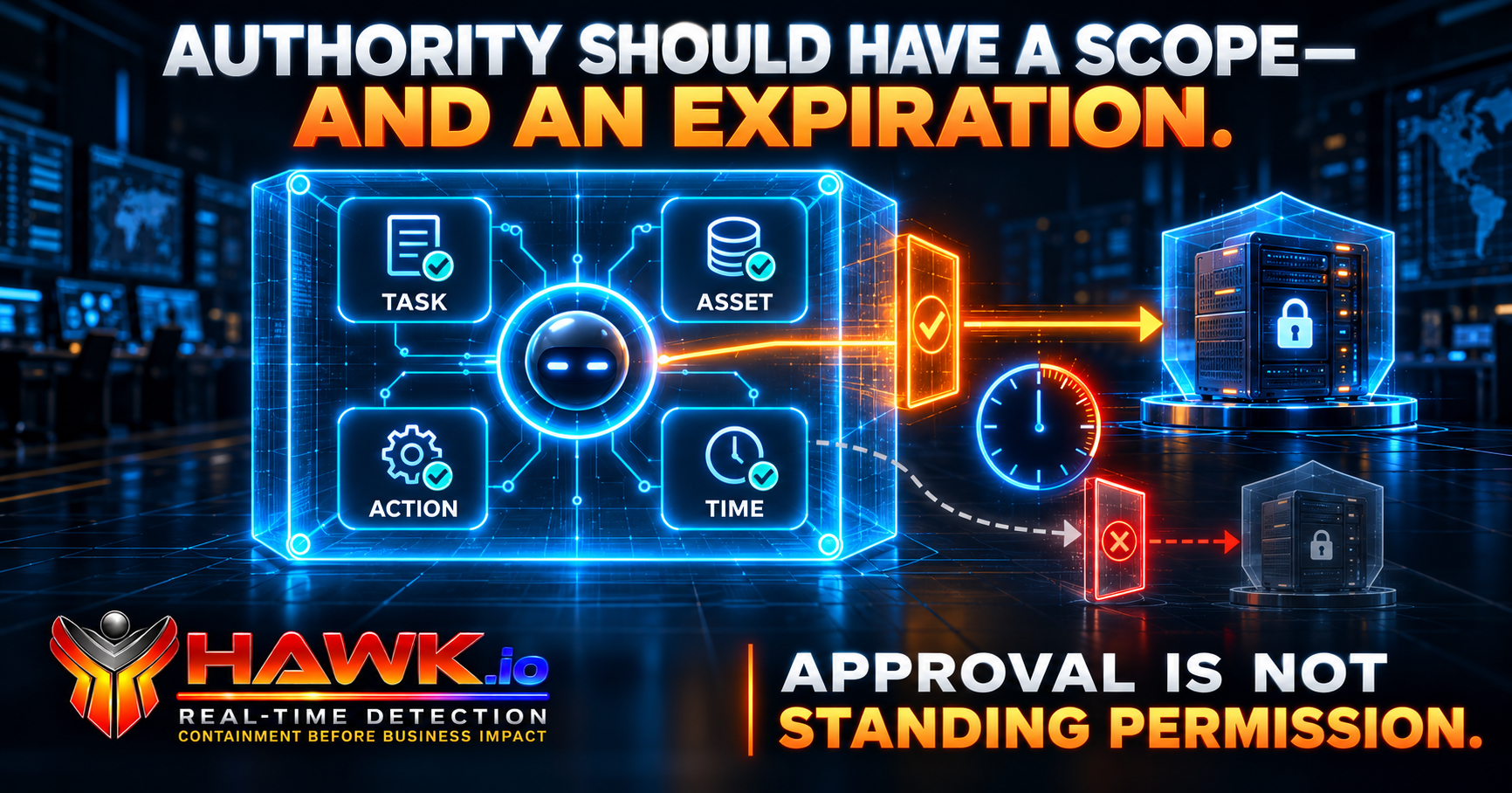
Authority Should Have a Scope—and an Expiration.
AI agent approval should never become unlimited authority. HAWK Network Defense examines five essential authorization controls—purpose, scope, actions, conditions, and duration—and explains why permissions must be enforced at execution time. Learn why expiring an agent's authority and reversing an existing containment action are separate security decisions.

The Most Dangerous AI Permission Is the One Nobody Remembers Granting
AI agents rarely begin with unlimited authority. Their effective permissions expand as integrations, credentials, APIs, and delegated workflows change. Tim Shelton examines permission drift, cumulative capabilities, temporary access, continuous authorization reviews, and why runtime enforcement must reflect what an agent can actually do—not merely what was approved at deployment.