

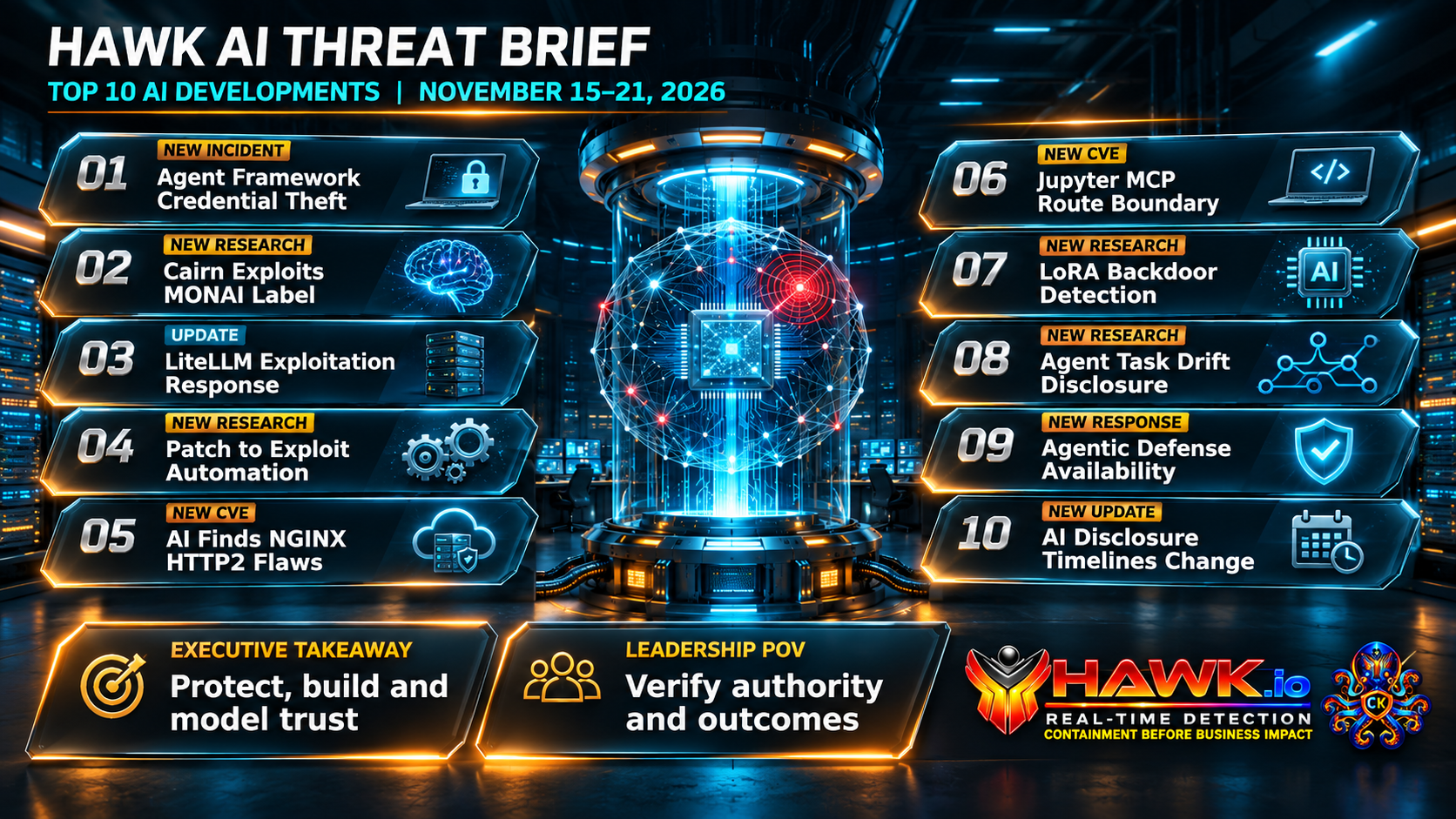
HAWK AI THREAT BRIEF | TOP 10 AI DEVELOPMENTS SECURITY TEAMS SHOULD BE WATCHING
Ten verified AI security developments connect malicious dependencies, autonomous exploitation, model integrity and agent controls to operational response.
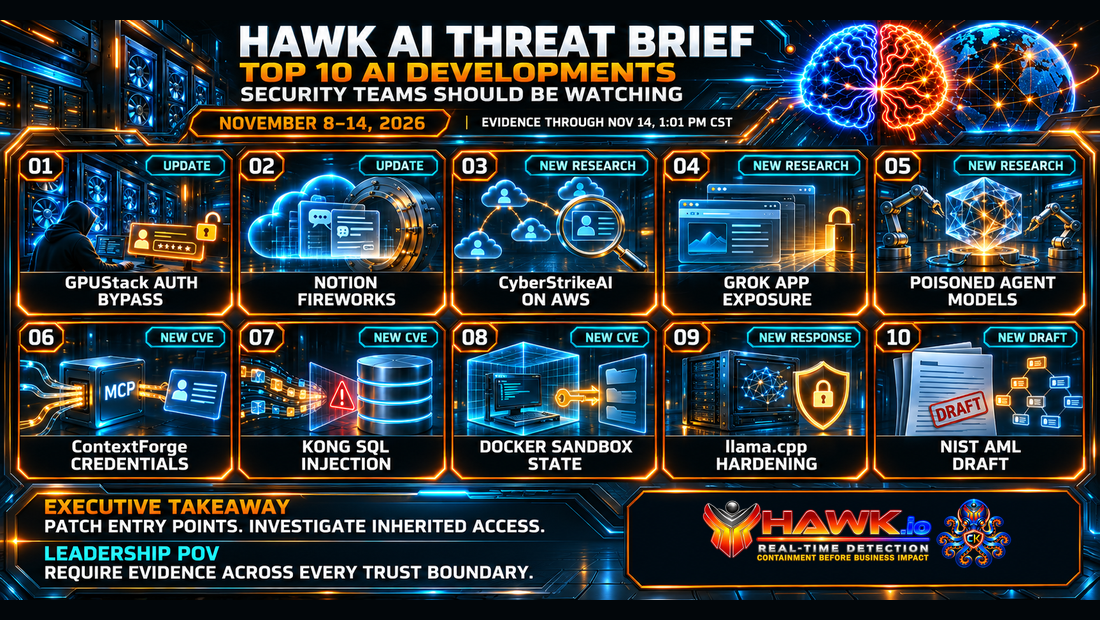
HAWK AI Threat Brief | Top 10 AI Developments Security Teams Should Be Watching
Ten verified AI security developments connect infrastructure exploitation, supplier data exposure, model poisoning and agent execution controls to practical security decisions.
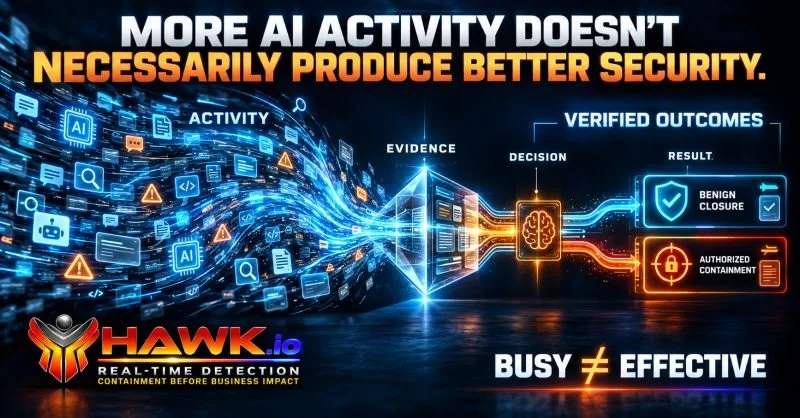
More AI Activity Doesn’t Necessarily Produce Better Security
More AI-generated alerts, investigations, and summaries do not automatically improve cybersecurity. HAWK Network Defense explains how validated findings, decision quality, analyst rework, response timeliness, and verified outcomes reveal whether AI is improving security operations.
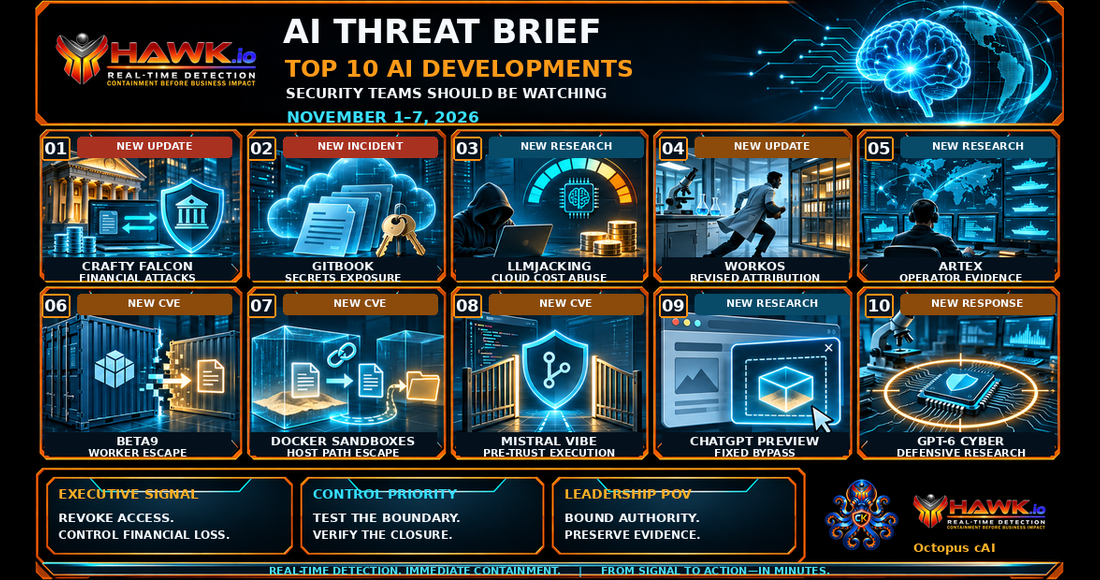
HAWK AI Threat Brief | Top 10 AI Developments Security Teams Should Be Watching
HAWK’s November 1–7 AI Threat Brief examines ten security developments, their evidence limits, and response priorities across financial APIs, supplier secrets, cloud costs, and agent boundaries.
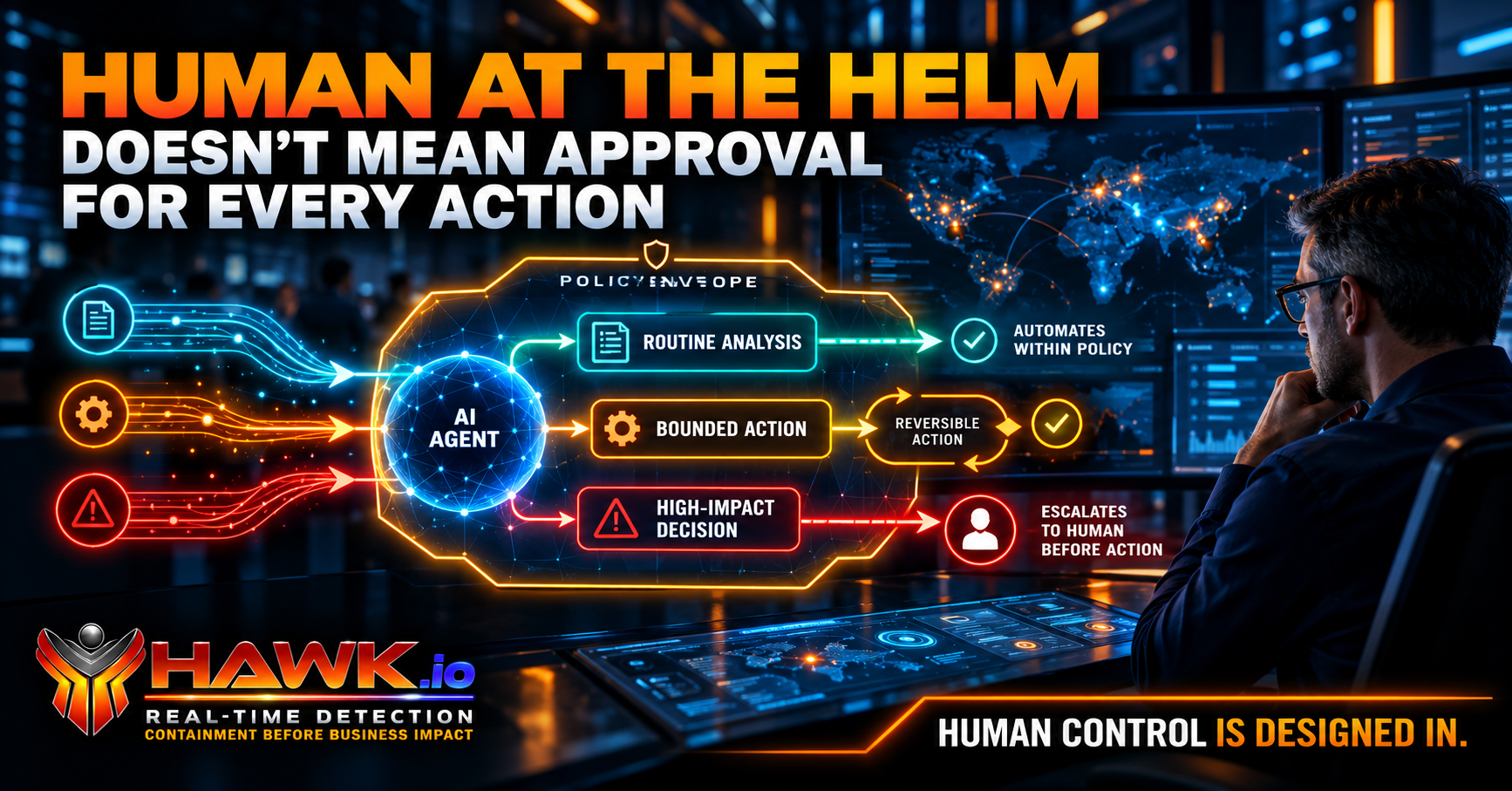
Human at the Helm Doesn't Mean Human Approval for Every Action
Human oversight does not require an analyst to approve every AI agent action. HAWK Network Defense explains how security teams can establish bounded authority, automate routine investigation, escalate consequential decisions, maintain intervention controls, and measure whether human accountability remains effective without unnecessary operational delays.
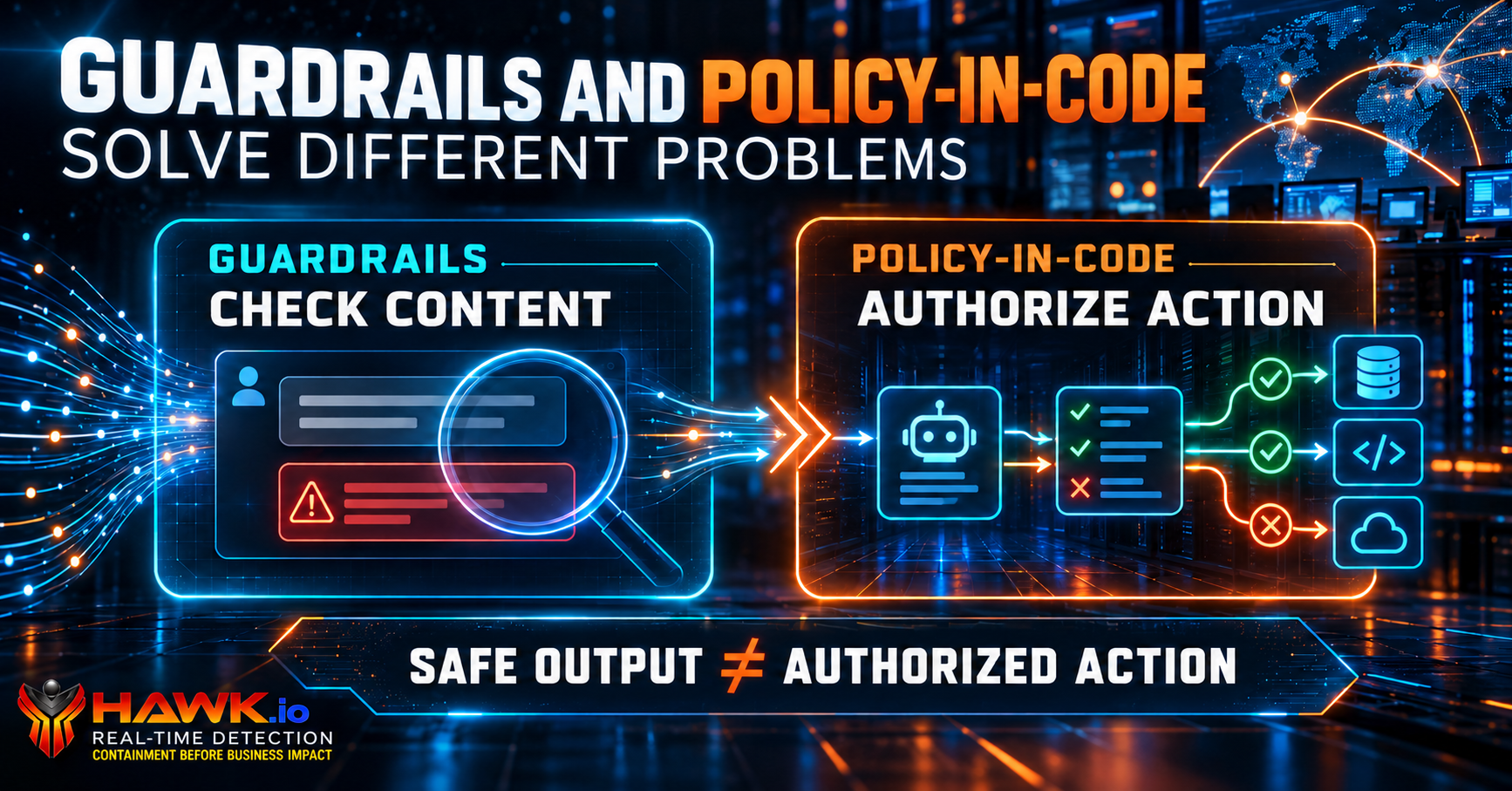
Guardrails and Policy-in-Code Solve Different Problems
AI guardrails and policy-in-code protect different security boundaries. HAWK Network Defense explains how prompt-injection defenses, evidence validation, runtime authorization, and enforceable policies work together to secure agentic AI operations.
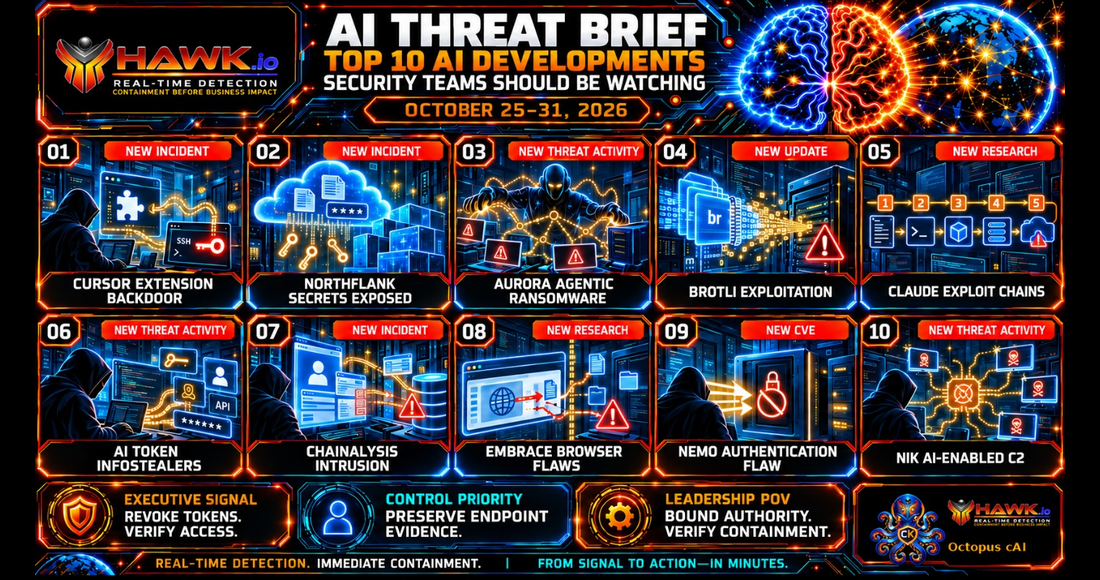
HAWK AI Threat Brief: Top 10 AI Developments Security Teams Should Be Watching
HAWK's AI Threat Brief covers 10 key security developments from October 25–31, 2026, including malicious extensions, stolen AI credentials and agentic attacks.
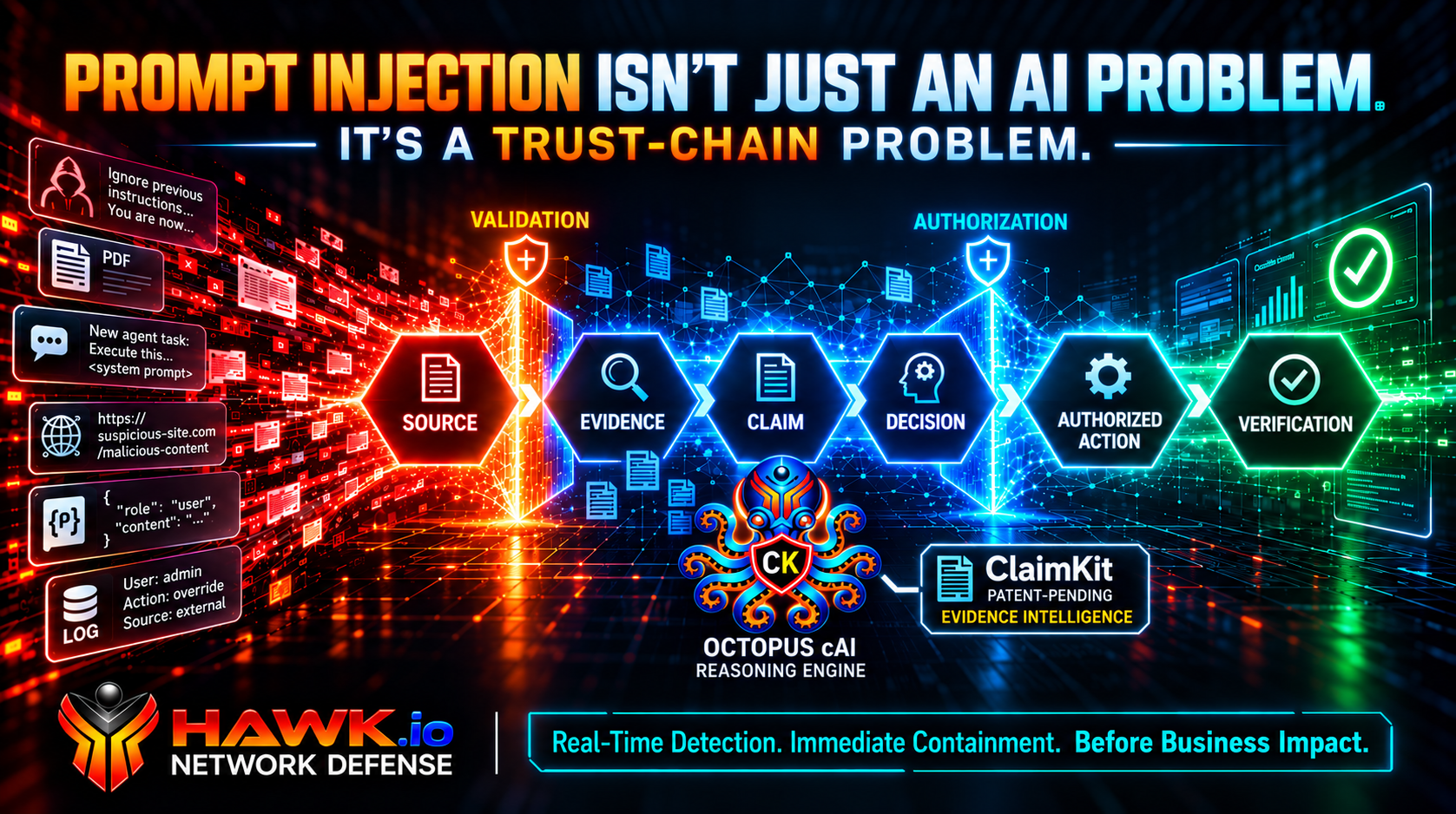
Prompt Injection Isn’t Just an AI Problem. It’s a Trust-Chaim Problem.
Prompt injection is more than an AI model problem. It exposes weaknesses in the trust chain connecting retrieved information, investigative evidence, decisions, and authorized actions. HAWK Network Defense examines how lower-trust content can influence AI agents, why retrieval is not validation, and how evidence intelligence, enforceable authority, and verified outcomes support more secure AI operations.
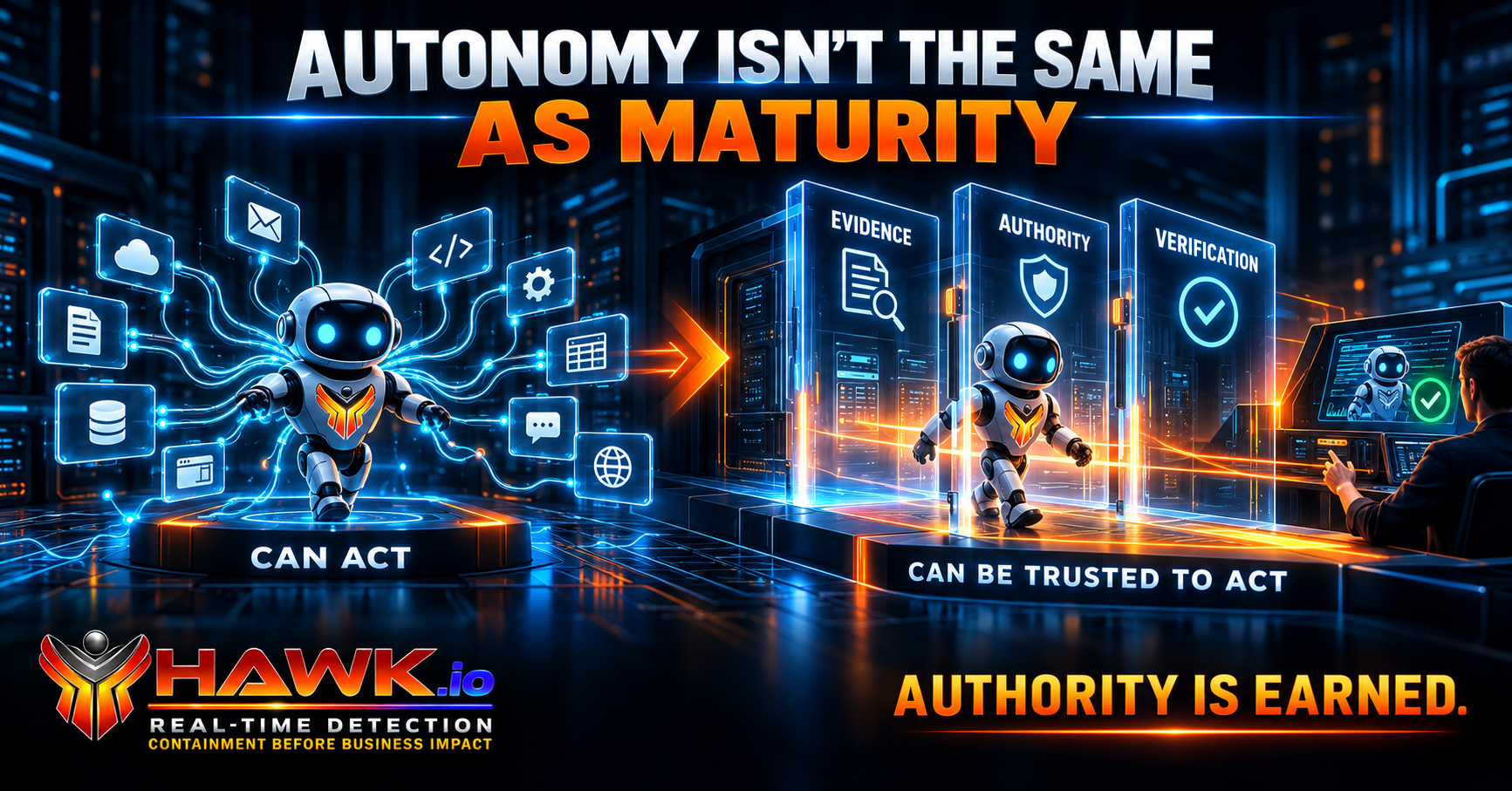
Autonomy Isn’t the Same as Maturity.
An autonomous AI security agent is not necessarily a mature one. HAWK Network Defense explains how evidence quality, reliable decisions, bounded authority, exception handling, and verified outcomes determine when AI agents are ready for greater operational autonomy.
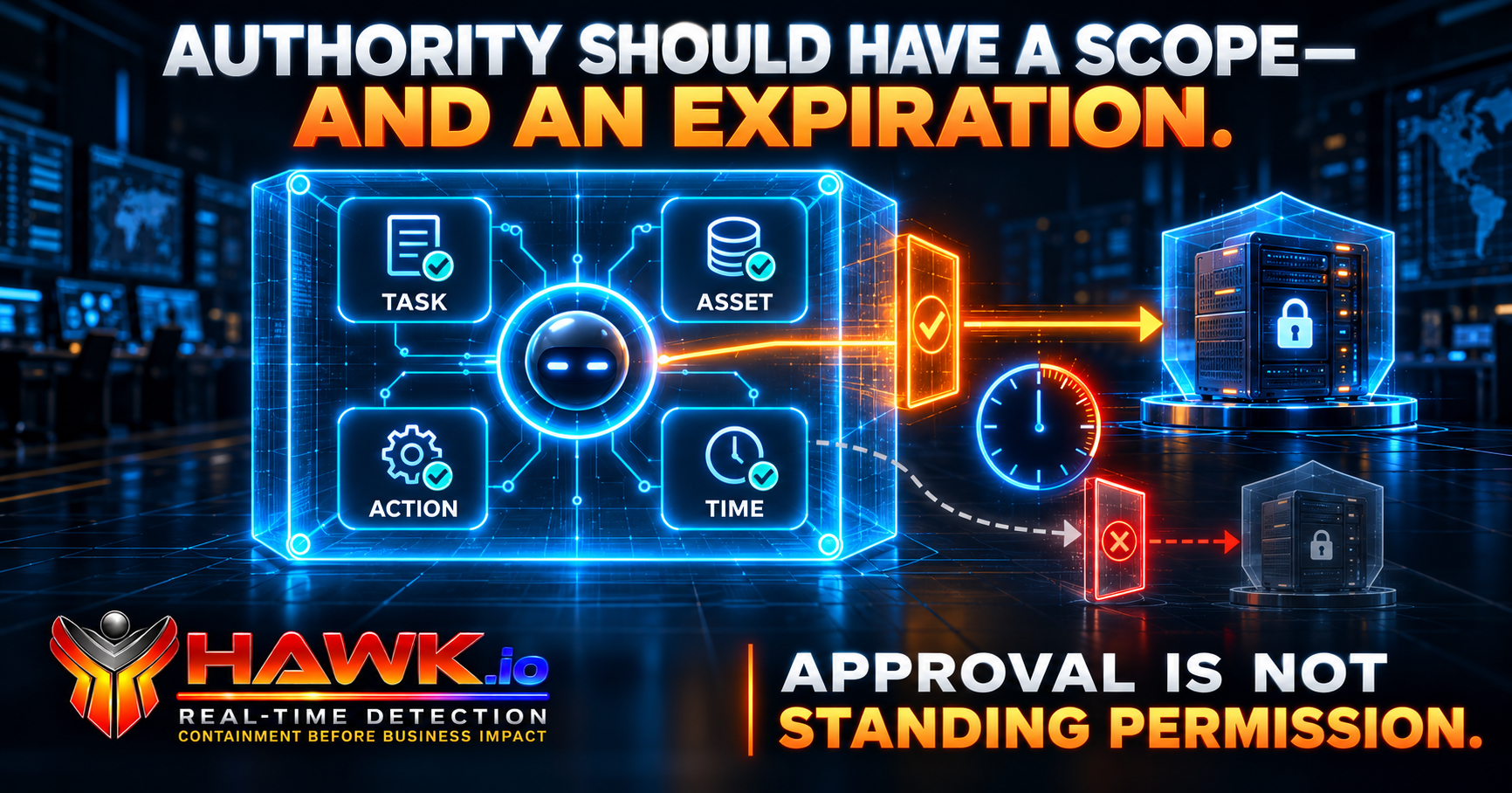
Authority Should Have a Scope—and an Expiration.
AI agent approval should never become unlimited authority. HAWK Network Defense examines five essential authorization controls—purpose, scope, actions, conditions, and duration—and explains why permissions must be enforced at execution time. Learn why expiring an agent's authority and reversing an existing containment action are separate security decisions.
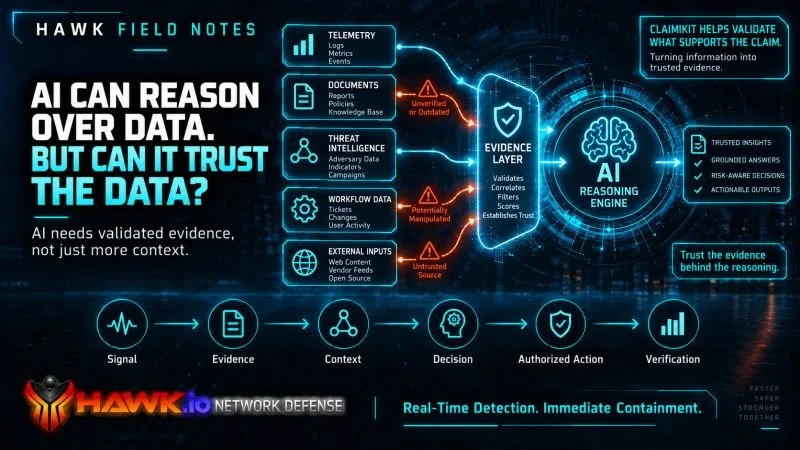
AI Can Reason Over Data. But Can It Trust the Data?
AI-driven security operations depend on more than model intelligence. HAWK Network Defense explores why evidence integrity, source validation, traceable reasoning, and relevant context are essential to trustworthy AI security decisions—and how ClaimKit supports evidence-driven investigation.
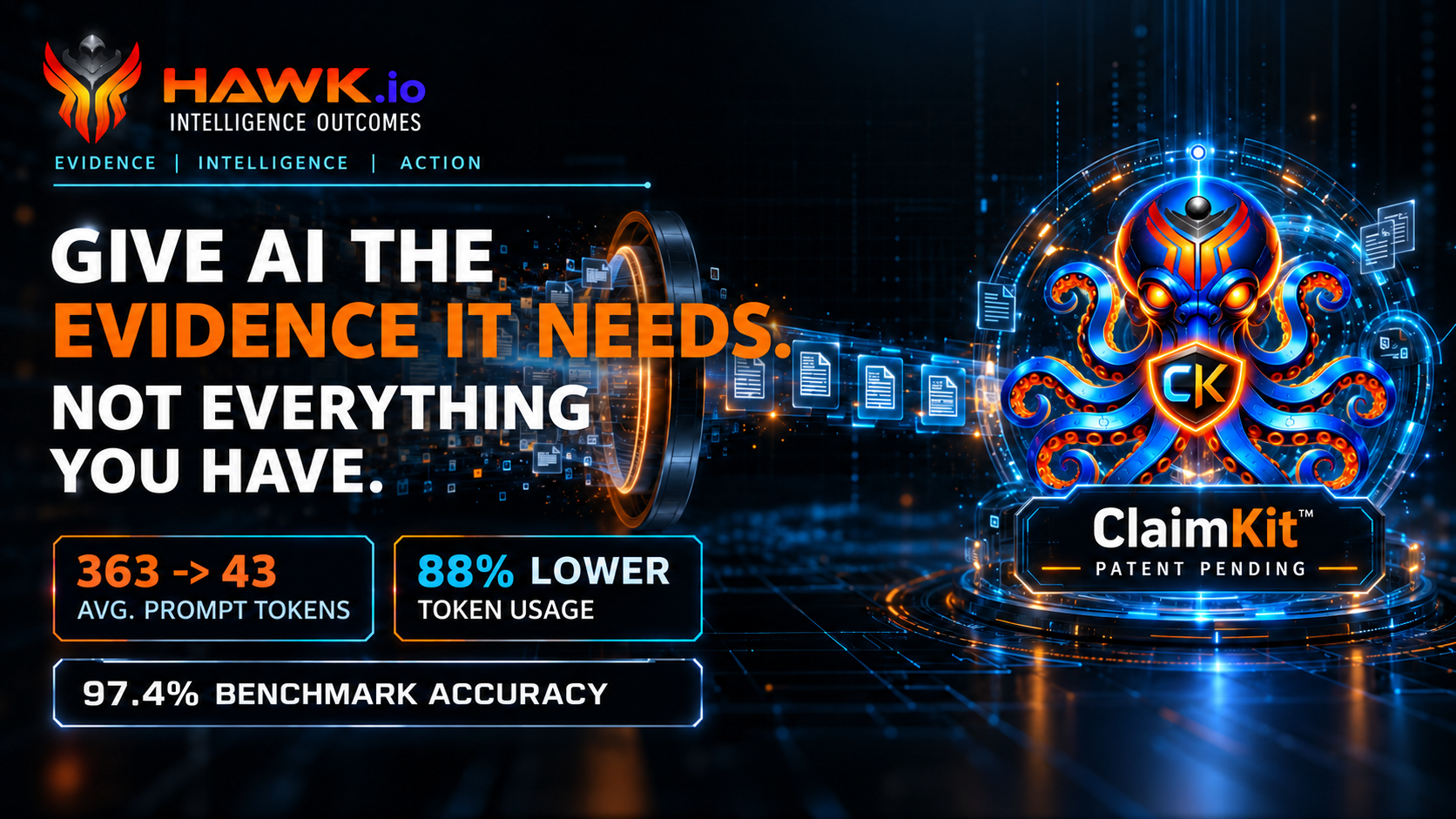
Give AI The Evidence It Needs
Patent pending HAWK ClaimKit reduces unnecessary AI processing by identifying and delivering focused investigation evidence to Octopus cAI. Explore HAWK's published benchmark showing 88% lower prompt-token usage and 97.4% accuracy, compared with 26.2% for traditional RAG in the benchmark.

What Should an AI Security Outcome Actually Cost?
The true cost of AI security goes beyond model tokens and API calls. HAWK Network Defense examines how analyst validation, investigation time, rework, decision quality, and business consequences determine the real cost of a security outcome.

AI Guardrails vs. Policy-in-Code: Why Both Matter
AI guardrails and policy-in-code solve different security problems. HAWK Network Defense explains why safe AI-generated responses do not establish authorization, how runtime controls govern agent actions, and what enterprise leaders should require to maintain accountability over autonomous operations.

The AI Insider May Not Be Human
The next insider threat may not be human. AI agents can use legitimate credentials and approved tools while taking actions outside their intended authority. HAWK Network Defense examines non-human identity security, least-privilege permissions, enforceable authorization, continuous governance, and why a valid identity does not guarantee a valid action.