


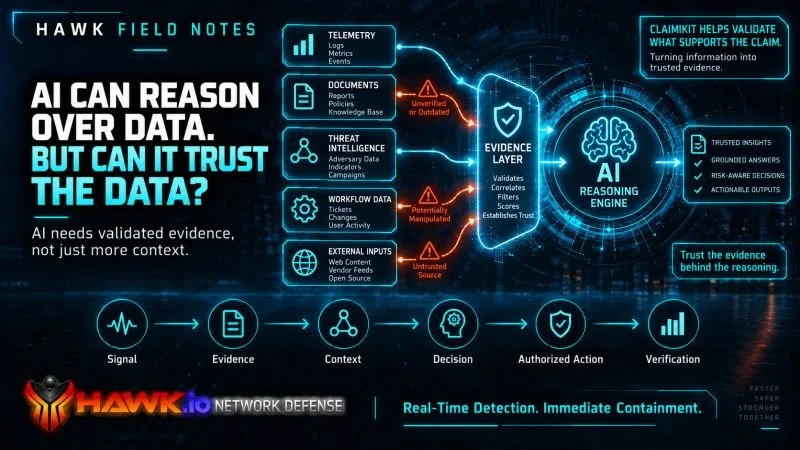
AI Can Reason Over Data. But Can It Trust the Data?
AI-driven security operations depend on more than model intelligence. HAWK Network Defense explores why evidence integrity, source validation, traceable reasoning, and relevant context are essential to trustworthy AI security decisions—and how ClaimKit supports evidence-driven investigation.

WHAT SHOULD AN AI SECURITY OUTCOME ACTUALLY COST?
The true cost of AI security goes beyond model tokens and API calls. HAWK Network Defense examines how analyst validation, investigation time, rework, decision quality, and business consequences determine the real cost of a security outcome.
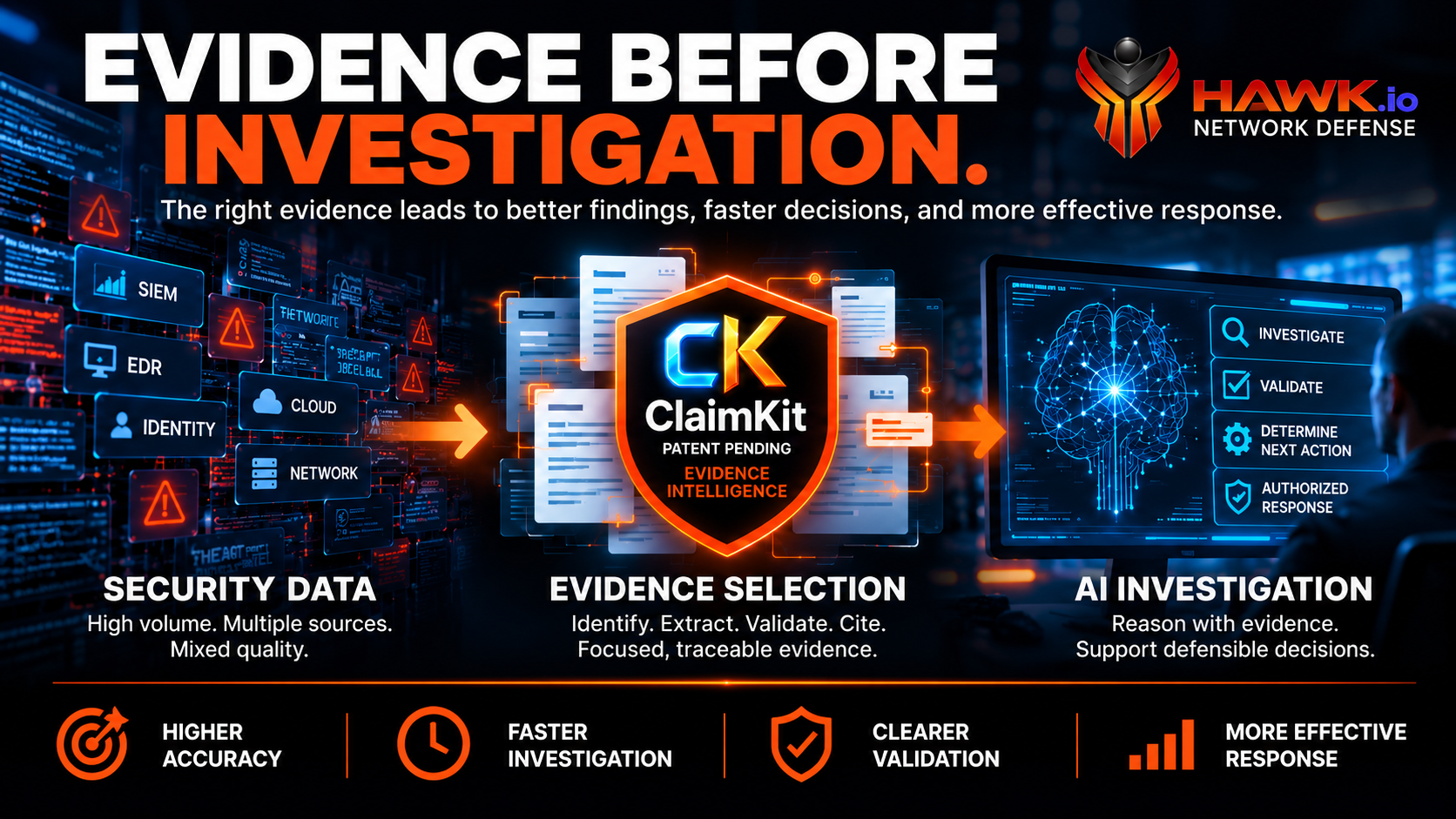
Why Evidence Selection Must Come Before AI Investigation
AI security investigations are only as reliable as the evidence behind them. Discover why selecting, validating, and citing relevant evidence before autonomous investigation matters—and how HAWK’s patent-pending ClaimKit supports evidence-grounded security decisions.

Your AI Agent Should Have to Earn More Authority
AI agents should not receive broad production authority simply because they can use a tool. Tim Shelton examines progressive autonomy, evidence-based promotion, runtime authorization, continuous monitoring, and when an agent's authority should be reduced or revoked.

AI Guardrails vs. Policy-in-Code: Why Both Matter
AI guardrails and policy-in-code address different security risks. HAWK Network Defense explains how content filtering, runtime authorization, scoped permissions, and human oversight work together to ensure AI agents execute only approved actions within defined enterprise security boundaries.

THE AI INSIDER MAY NOT BE HUMAN
The next insider threat may not be human. HAWK Network Defense examines how AI agents expand enterprise insider risk and why securing non-human identities requires defined purpose, scoped permissions, enforceable authority, action monitoring, and verified outcomes.

The Most Dangerous AI Permission Is the One Nobody Remembers Granting
AI agent permissions can become dangerous long after they were originally approved. Tim Shelton, Founder and CTO of HAWK Network Defense, explains how privilege accumulation, changing integrations, and delegated authority can expand an agent's effective access—and why continuous permission governance is essential.

Agentic AI Changes the Control Problem
Agentic AI changes enterprise security when systems move from generating answers to executing actions. Tim Shelton, Founder and CTO of HAWK Network Defense, explains why securing autonomous AI agents requires enforceable runtime controls, scoped permissions, delegated authority, human oversight, and accountability.

More AI Will Not Fix a Poorly Designed SOC
Adding more AI won't fix a poorly designed Security Operations Center (SOC). Tim Shelton, Founder and CTO of HAWK Network Defense, explains why effective AI-driven security operations require trusted context, connected workflows, clearly defined decision authority, and verified containment—not simply faster analysis, more alerts, or additional automation.

AI Authority Is Becoming a Business Control
As AI agents move from recommending actions to executing them, organizations must govern more than system access. David Harris, CEO of HAWK Network Defense, explains why delegated AI authority requires enforceable boundaries, risk-based autonomy, ongoing oversight, and clear human accountability.